




How does a flow sensor work?
Dec 04, 2025
Leave a message
Hey there! As a sensor supplier, I often get asked about how flow sensors work. It's a super interesting topic, and I'm stoked to share the ins and outs with you.
So, what exactly is a flow sensor? Well, it's a device that measures the flow rate of a fluid (that can be a liquid or a gas). There are a bunch of different types of flow sensors out there, each with its own unique way of doing the job. Let's dive into some of the most common ones.
Differential Pressure Flow Sensors
One of the oldest and most widely used types is the differential pressure flow sensor. The basic idea behind it is pretty simple. You've got a constriction in the pipe where the fluid is flowing. When the fluid passes through this constriction, its velocity increases, and according to Bernoulli's principle, the pressure drops.
The sensor measures the difference in pressure between the upstream and downstream sides of the constriction. This pressure difference is then used to calculate the flow rate. The relationship between the pressure difference and the flow rate is based on the laws of fluid dynamics.
The advantage of differential pressure flow sensors is that they're relatively simple and can be used with a wide range of fluids. However, they do have some limitations. For example, they can cause a significant pressure drop in the system, which might not be ideal in some applications. And they need to be carefully calibrated to ensure accurate measurements.
Thermal Flow Sensors
Thermal flow sensors work on the principle of heat transfer. They typically have two temperature sensors and a heating element. One temperature sensor measures the temperature of the fluid before it passes by the heating element, and the other measures the temperature after.
When the fluid flows past the heating element, it carries away some of the heat. The amount of heat carried away is related to the flow rate of the fluid. By measuring the temperature difference between the two sensors, the sensor can calculate the flow rate.


These sensors are great for measuring the flow of gases, especially in applications where high accuracy is required. They're also relatively immune to changes in pressure and viscosity. But they can be a bit more expensive than some other types of flow sensors, and they might not work as well with liquids.
Ultrasonic Flow Sensors
Ultrasonic flow sensors use ultrasonic waves to measure the flow rate. There are two main types: transit-time and Doppler.
In transit-time ultrasonic flow sensors, ultrasonic waves are sent through the fluid in both the upstream and downstream directions. The time it takes for the waves to travel between two points is measured. When the fluid is flowing, the time it takes for the wave to travel downstream is shorter than the time it takes to travel upstream. The difference in these transit times is used to calculate the flow rate.
Doppler ultrasonic flow sensors, on the other hand, work by sending an ultrasonic wave into the fluid. When the wave hits particles or bubbles in the fluid, it gets reflected back to the sensor. The frequency of the reflected wave is shifted due to the Doppler effect. By measuring this frequency shift, the sensor can determine the flow rate of the fluid.
Ultrasonic flow sensors are non-invasive, which means they don't need to be inserted into the fluid. This makes them easy to install and maintain. They're also suitable for a wide range of pipe sizes and can be used with both clean and dirty fluids.
Magnetic Flow Sensors
Magnetic flow sensors, also known as magmeters, are based on Faraday's law of electromagnetic induction. They work with conductive fluids, like water with dissolved salts.
The sensor has a magnetic field that passes through the fluid in the pipe. As the conductive fluid flows through the magnetic field, an electric voltage is induced. The magnitude of this voltage is proportional to the flow rate of the fluid.
Magnetic flow sensors are very accurate and can handle a wide range of flow rates. They also don't cause any pressure drop in the system. However, they can only be used with conductive fluids, and they're relatively expensive.
Turbine Flow Sensors
Turbine flow sensors have a turbine wheel that's placed in the path of the fluid flow. As the fluid flows past the turbine, it causes the wheel to rotate. The speed of the rotation is directly related to the flow rate of the fluid.
A sensor, usually a magnetic or optical one, measures the rotation speed of the turbine wheel. This information is then used to calculate the flow rate.
Turbine flow sensors are simple and reliable. They're commonly used in applications where a moderate level of accuracy is required, like in fuel flow measurement. But they can be affected by changes in fluid viscosity and can wear out over time.
Our Flow Sensors
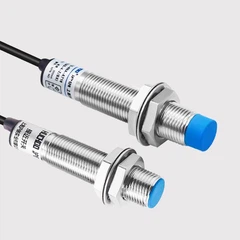
At our company, we offer a wide range of high - quality flow sensors to meet different customer needs. For example, the E3JK - RR11 - C 2M OMS Sensor is a great option for many industrial applications. It's known for its reliability and accurate measurements.
The 0J5136 Sensor is another popular choice. It's designed to work in harsh environments and can provide stable performance over a long period.
And if you're looking for a sensor with advanced features, the IE5338 Sensor might be the one for you. It offers high - precision measurements and is suitable for a variety of fluid types.
Why Choose Our Flow Sensors?
We understand that choosing the right flow sensor can be a bit of a headache. That's why we're here to help. Our team of experts has years of experience in the sensor industry and can provide you with professional advice on which sensor is best for your specific application.
We also offer excellent after - sales service. If you have any questions or problems with our sensors, our support team will be there to assist you.
In addition, our sensors are competitively priced. We believe that high - quality products shouldn't break the bank, so we strive to offer the best value for your money.
Contact Us for Procurement
If you're interested in purchasing flow sensors for your business, we'd love to hear from you. Whether you're a small startup or a large corporation, we can provide you with the right sensors at the right price.
Just reach out to us, and we'll start the conversation about your requirements. We'll work with you to find the perfect solution for your flow measurement needs.
References
- "Flow Measurement Handbook: Industrial Designs and Applications" by Richard W. Miller
- "Instrumentation, Measurement, and Analysis" by Jack D. Nicholas
- Various technical documents from sensor manufacturers.
Send Inquiry