




How does a radar sensor work?
Dec 18, 2025
Leave a message
Radar sensors are a cornerstone of modern technological advancements, playing a pivotal role in various industries, from automotive to aerospace, and even in smart home applications. As a sensor supplier, I've witnessed firsthand the growing demand for these sophisticated devices and the curiosity surrounding how they operate. In this blog, I'll delve into the inner workings of radar sensors, shedding light on their principles, components, and applications.
The Basics of Radar Technology
At its core, radar (Radio Detection and Ranging) is a system that uses radio waves to detect and locate objects. The fundamental principle behind radar is the transmission of radio waves towards a target and the reception of the reflected waves, known as echoes. By analyzing the properties of these echoes, such as their time of arrival, frequency shift, and amplitude, radar sensors can determine the target's distance, speed, and direction.
The concept of radar dates back to the early 20th century, with significant developments during World War II for military applications. Since then, radar technology has evolved rapidly, becoming more compact, accurate, and versatile. Today, radar sensors are used in a wide range of applications, including traffic monitoring, weather forecasting, and collision avoidance systems in vehicles.
How Radar Sensors Work
A radar sensor consists of several key components, each playing a crucial role in the detection and measurement process. These components include a transmitter, a receiver, an antenna, and a signal processing unit.
Transmitter
The transmitter is responsible for generating and emitting radio waves. It typically consists of an oscillator, which produces a continuous or pulsed radio frequency signal, and a power amplifier, which boosts the signal's strength. The transmitted radio waves are then sent out into the environment through the antenna.
Antenna
The antenna is a critical component of the radar sensor, as it is responsible for both transmitting and receiving radio waves. It is designed to focus the transmitted waves in a specific direction and to capture the reflected echoes from the target. Antennas come in various shapes and sizes, depending on the application and the desired performance characteristics. For example, in automotive radar sensors, a planar antenna array is often used to provide a wide field of view and high angular resolution.
Receiver
The receiver is responsible for capturing the reflected radio waves and converting them into an electrical signal. It typically consists of a low-noise amplifier, which amplifies the weak echo signal, and a mixer, which converts the radio frequency signal to a lower intermediate frequency for further processing. The receiver also includes a filter to remove any unwanted noise and interference from the received signal.
Signal Processing Unit
The signal processing unit is the brain of the radar sensor, responsible for analyzing the received echo signal and extracting the relevant information about the target. It uses a variety of algorithms and techniques to process the signal, such as range estimation, Doppler processing, and target tracking. The processed data is then used to determine the target's distance, speed, and direction.
Radar Sensor Operation Modes
Radar sensors can operate in different modes, depending on the application and the desired performance characteristics. The two main operation modes are continuous-wave (CW) radar and pulsed radar.
Continuous-Wave (CW) Radar
In CW radar, the transmitter emits a continuous radio frequency signal. The frequency of the transmitted signal remains constant, and the radar sensor measures the frequency shift of the reflected signal, known as the Doppler effect. The Doppler effect occurs when the target is moving relative to the radar sensor, causing a change in the frequency of the reflected signal. By measuring the Doppler shift, the radar sensor can determine the target's speed.
CW radar is commonly used in applications where the primary objective is to measure the speed of a target, such as traffic speed monitoring and speed guns used by law enforcement. It is also used in some automotive radar sensors for adaptive cruise control systems, where the radar sensor continuously monitors the speed of the vehicle in front and adjusts the speed of the host vehicle accordingly.
Pulsed Radar
In pulsed radar, the transmitter emits short pulses of radio waves at regular intervals. The radar sensor measures the time it takes for the pulse to travel to the target and back, known as the time of flight (TOF). By knowing the speed of light, the radar sensor can calculate the distance to the target based on the TOF.
Pulsed radar is commonly used in applications where the primary objective is to measure the distance to a target, such as in aircraft altimeters and ground-based radar systems for air traffic control. It is also used in automotive radar sensors for collision avoidance systems, where the radar sensor continuously monitors the distance to the vehicle in front and alerts the driver if a collision is imminent.
Applications of Radar Sensors
Radar sensors are used in a wide range of applications, thanks to their ability to detect and measure objects in all weather conditions and at long distances. Some of the most common applications of radar sensors include:
Automotive
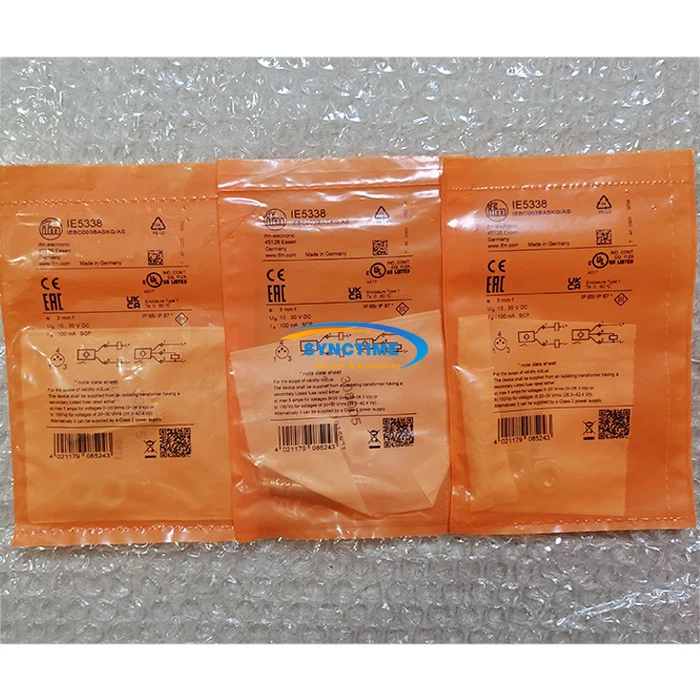
In the automotive industry, radar sensors are used in a variety of safety and driver assistance systems, such as adaptive cruise control, collision avoidance, and blind spot detection. These systems use radar sensors to monitor the surrounding environment and provide real-time information to the driver, helping to prevent accidents and improve road safety. For example, IE5338 Sensor is a high-performance radar sensor that can be used in automotive applications to provide accurate distance and speed measurements.
Aerospace
In the aerospace industry, radar sensors are used for navigation, weather monitoring, and collision avoidance. Aircraft use radar sensors to detect other aircraft, terrain, and weather conditions, helping to ensure safe and efficient flight operations. Radar sensors are also used in satellites for Earth observation and remote sensing applications.

Industrial
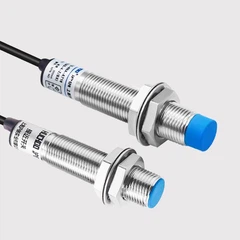
In the industrial sector, radar sensors are used for level measurement, object detection, and process control. They are commonly used in industries such as oil and gas, chemical, and food and beverage, where accurate and reliable measurement of liquid and solid levels is critical. For example, IL5004 Inductive Sensor is an inductive radar sensor that can be used in industrial applications to detect the presence of metallic objects.
Smart Home
In the smart home industry, radar sensors are used for occupancy detection, motion sensing, and energy management. They can be used to automatically turn on lights, adjust the temperature, and control other smart devices based on the presence or movement of people in the room. For example, E2B-M12KN08-WZ-B1 Sensor is a small and compact radar sensor that can be used in smart home applications to detect motion and occupancy.
Conclusion
Radar sensors are a powerful and versatile technology that has revolutionized the way we detect and measure objects in the world around us. By understanding how radar sensors work, we can appreciate their importance in various industries and applications. As a sensor supplier, I'm committed to providing high-quality radar sensors that meet the needs of our customers. If you're interested in learning more about our radar sensors or have any questions about their applications, please don't hesitate to contact us for a procurement discussion.
References
- Skolnik, M. I. (2008). Introduction to Radar Systems. McGraw-Hill.
- Richards, M. A., Scheer, J. A., & Holm, W. A. (2010). Principles of Modern Radar: Basic Principles. SciTech Publishing.
- Barton, D. K. (2005). Radar System Analysis and Design Using MATLAB. CRC Press.
Send Inquiry