




How does an inverter handle voltage fluctuations?
Sep 26, 2025
Leave a message
Hey there! As an inverter supplier, I've seen my fair share of voltage fluctuations and how important it is for inverters to handle them properly. In this blog, I'm gonna break down how an inverter deals with those pesky voltage swings, and why it matters for your industrial or home setup.
What Are Voltage Fluctuations?
First off, let's talk about what voltage fluctuations actually are. Voltage fluctuations are changes in the electrical voltage level that can occur in an electrical power system. These changes can be caused by a bunch of factors, like sudden increases or decreases in power demand, problems with the power grid, or even lightning strikes.
Voltage fluctuations can be short - term, like a quick dip or spike, or long - term, where the voltage stays at an abnormal level for a while. Short - term fluctuations are often called sags (voltage dips) or swells (voltage spikes), and they can happen in a matter of milliseconds to a few seconds. Long - term fluctuations can last for minutes, hours, or even days.
Why Are Voltage Fluctuations a Problem?
You might be wondering, "So what if the voltage goes up or down a bit?" Well, it can cause some serious issues. For electrical equipment, voltage fluctuations can lead to premature wear and tear. A voltage spike can fry sensitive electronic components, while a voltage sag can cause motors to stall or run inefficiently. In industrial settings, this can mean production downtime, which really hits the bottom line. In homes, it can damage appliances like TVs, refrigerators, and computers.
How an Inverter Handles Voltage Fluctuations
Voltage Sensing
The first step in an inverter's defense against voltage fluctuations is sensing the incoming voltage. Inverters are equipped with voltage sensors that constantly monitor the input voltage. These sensors are super accurate and can detect even the slightest changes in voltage.
Once the inverter senses a deviation from the normal voltage range, it kicks into action. For example, if the input voltage drops below a certain threshold, the inverter knows there's a voltage sag, and if it goes above a set limit, it detects a voltage swell.
Voltage Regulation
After detecting a voltage fluctuation, the inverter uses its internal circuitry to regulate the output voltage. There are a few different ways it can do this.
One common method is through pulse - width modulation (PWM). PWM is a technique where the inverter controls the amount of power delivered to the load by varying the width of the electrical pulses. When there's a voltage sag, the inverter can increase the width of the pulses to boost the output voltage. Conversely, during a voltage swell, it can decrease the pulse width to lower the output voltage.
Another way is through the use of transformers. Some inverters have built - in transformers that can step up or step down the voltage as needed. If the input voltage is too low, the transformer can increase it to the desired level, and if it's too high, it can reduce it.
Energy Storage and Backup
Many modern inverters also have energy storage capabilities, like built - in batteries. When there's a voltage dip, the inverter can draw power from the battery to maintain a stable output voltage. This is especially useful in areas with unreliable power grids or during power outages.
For example, if you're running a critical piece of equipment in an industrial plant and there's a sudden voltage sag, the inverter can switch to battery power for a short period until the grid voltage stabilizes or until a backup generator kicks in.
Over - and Under - Voltage Protection
Inverters are also designed with over - and under - voltage protection mechanisms. If the voltage fluctuation is too extreme and the inverter can't regulate it within the safe range, it will automatically shut down to protect itself and the connected equipment.
This is a crucial safety feature. For instance, if there's a massive voltage spike due to a lightning strike, the inverter will detect it and cut off the power to prevent damage to its internal components and the connected load.
Examples of Inverters and Their Capabilities
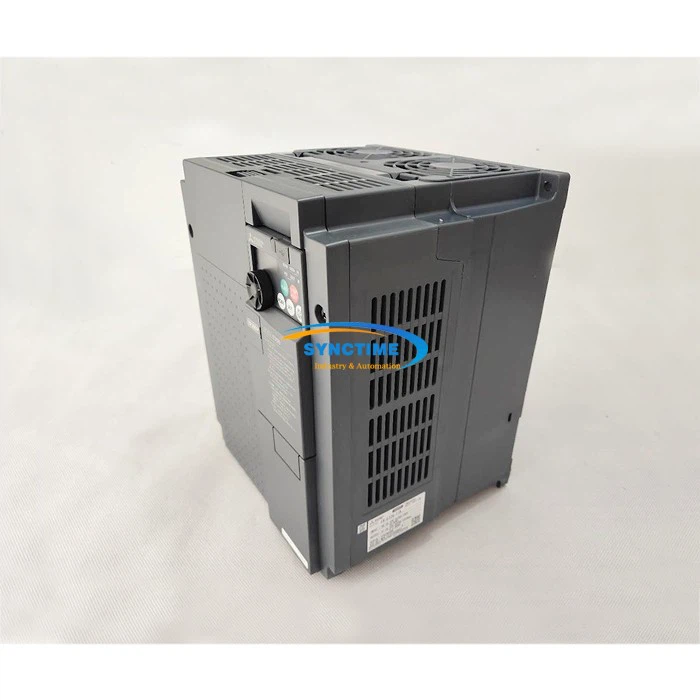
Let's take a look at some of the inverters we offer. The 22C - D038A103 Frequency Inverter 18.5kw is a great choice for industrial applications. It has advanced voltage sensing and regulation capabilities. It can quickly detect voltage fluctuations and adjust the output voltage using PWM, ensuring a stable power supply for motors and other equipment.
The 6SL3210 - 5BE32 - 2UV0 Inverter 22KW is another high - performance inverter. It comes with built - in energy storage options, so it can handle short - term voltage sags by providing power from its battery. This inverter is suitable for continuous - operation systems where even a brief power interruption can cause significant problems.
The FR - E720 - 11K FR - E720 - 15K Inverter is designed for smaller - scale applications, like home appliances or small businesses. It has reliable over - and under - voltage protection, so you don't have to worry about your equipment getting damaged by voltage fluctuations.
Conclusion
In conclusion, voltage fluctuations are a real headache, but inverters are the solution. They can sense, regulate, and protect against these fluctuations, ensuring a stable and safe power supply for your equipment. Whether you're running a large industrial plant or just want to keep your home appliances running smoothly, having a good inverter is essential.
If you're facing issues with voltage fluctuations or are in the market for a new inverter, don't hesitate to reach out. We can help you find the right inverter for your specific needs. Contact us to start the procurement process and let's get you a reliable power solution.

References
- "Power Electronics: Converters, Applications, and Design" by Ned Mohan, Tore M. Undeland, and William P. Robbins
- "Electric Power Systems: A Conceptual Introduction" by Daniel A. Hammerstrom and Steven H. Leeb
Send Inquiry