




How does the output frequency affect the operation of appliances?
Oct 09, 2025
Leave a message
The output frequency of an inverter plays a crucial role in the operation of electrical appliances. As an inverter supplier, I have witnessed firsthand how different output frequencies can significantly impact the performance, efficiency, and lifespan of various appliances. In this blog post, I will delve into the science behind output frequency and its effects on appliance operation, providing insights based on my experience in the industry.
Understanding Output Frequency
Output frequency refers to the number of cycles per second (hertz, Hz) at which an inverter generates an alternating current (AC). In most countries, the standard mains frequency is either 50 Hz or 60 Hz. However, inverters can be programmed to produce a wide range of frequencies, depending on the requirements of the connected appliances.
The ability to adjust the output frequency is one of the key advantages of using an inverter. It allows for precise control of the speed and torque of electric motors, which are found in many household and industrial appliances. By varying the frequency, the inverter can match the power supply to the specific needs of the appliance, resulting in improved performance and energy efficiency.
Effects on Electric Motors
Electric motors are the heart of many appliances, including refrigerators, air conditioners, washing machines, and industrial machinery. The output frequency of an inverter has a direct impact on the speed and torque of these motors.
Speed Control
The speed of an electric motor is directly proportional to the frequency of the power supply. By increasing the output frequency, the motor will run faster, while decreasing the frequency will slow it down. This speed control feature is particularly useful in applications where the load varies, such as in a conveyor belt or a variable-speed fan.
For example, in an air conditioning system, the compressor motor can be adjusted to run at different speeds depending on the cooling demand. By reducing the frequency during periods of low demand, the motor consumes less energy, resulting in significant cost savings.
Torque Generation
In addition to speed control, the output frequency also affects the torque generated by the motor. Torque is the rotational force that enables the motor to perform work. At low frequencies, the motor may experience a decrease in torque, which can lead to reduced performance or even stalling.

To overcome this issue, inverters are designed to provide a boost in torque at low frequencies. This ensures that the motor can start smoothly and maintain a stable operation, even under heavy loads.
Effects on Other Appliances
While electric motors are the most obvious beneficiaries of variable frequency control, other appliances can also be affected by the output frequency of an inverter.
Lighting
Fluorescent and LED lighting fixtures are sensitive to the frequency of the power supply. At low frequencies, these lights may flicker or produce a buzzing sound, which can be annoying and potentially harmful to the eyes.
Inverters can be programmed to provide a stable frequency output, ensuring that the lighting operates smoothly and efficiently. This is particularly important in applications where high-quality lighting is required, such as in offices, hospitals, and retail stores.
Electronics
Many electronic devices, such as computers, televisions, and audio equipment, are designed to operate on a specific frequency. Using an inverter with an incorrect output frequency can cause these devices to malfunction or even damage them.
To avoid these issues, it is important to choose an inverter that is compatible with the frequency requirements of the connected electronics. Most modern inverters are designed to provide a stable and accurate frequency output, ensuring the safe and reliable operation of electronic devices.
Choosing the Right Inverter
When selecting an inverter for your appliances, it is important to consider the following factors:
Power Rating
The power rating of the inverter should be sufficient to meet the power requirements of the connected appliances. It is recommended to choose an inverter with a slightly higher power rating than the total power consumption of the appliances to ensure reliable operation.
Output Frequency Range
The output frequency range of the inverter should cover the frequency requirements of the connected appliances. Most inverters can be programmed to produce a frequency range of 0 to 400 Hz, which is suitable for a wide range of applications.
Compatibility
The inverter should be compatible with the type of appliances you are using. Some appliances, such as certain types of motors or electronics, may require a specific type of inverter or additional features to operate correctly.
Efficiency
The efficiency of the inverter is an important factor to consider, as it can have a significant impact on energy consumption and operating costs. Look for an inverter with a high efficiency rating to minimize energy losses and save money in the long run.
Conclusion
The output frequency of an inverter has a profound impact on the operation of electrical appliances. By providing precise control of the speed and torque of electric motors, as well as a stable power supply for other appliances, inverters can improve performance, efficiency, and reliability.
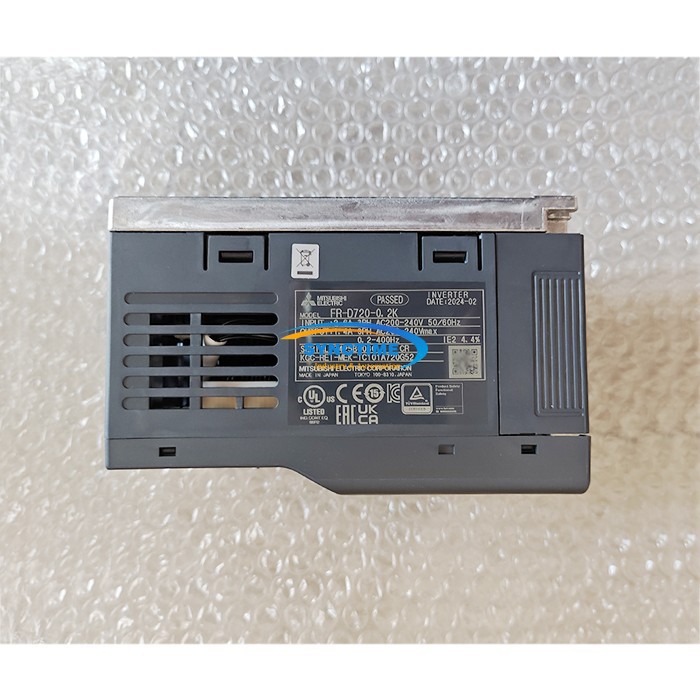
As an inverter supplier, I am committed to providing high-quality products that meet the diverse needs of my customers. Whether you are looking for a 6SL3210-5BB11-2UV1 Inverter, a FR-E720-0.2K FR-E720-0.1K Inverter, or a FR-D720-0.2K Inverter 0.2KW, I can help you find the right solution for your application.
If you have any questions or would like to discuss your inverter requirements, please do not hesitate to contact me. I look forward to working with you to optimize the performance of your appliances and reduce your energy costs.
References
- "Electric Motor Drives: Modeling, Analysis, and Control" by Bin Wu, Ivan Boldea, and Syed Islam
- "Power Electronics: Converters, Applications, and Design" by Ned Mohan, Tore M. Undeland, and William P. Robbins
- "Handbook of Electric Power Calculations" by Hadi Saadat
Send Inquiry