




How to choose the right sensor?
Nov 28, 2025
Leave a message
When it comes to industrial operations, sensors play a crucial role in ensuring efficiency, safety, and accuracy. As a sensor supplier, I understand the challenges that customers face in choosing the right sensor for their specific applications. In this blog post, I will share some key factors to consider when selecting a sensor, along with some recommendations for popular sensors in the market.
Understanding Your Application Requirements
The first step in choosing the right sensor is to have a clear understanding of your application requirements. This includes identifying the type of measurement you need to make, the environment in which the sensor will operate, and the level of accuracy and reliability required.
Type of Measurement
Sensors are designed to measure a wide range of physical quantities, such as temperature, pressure, flow, level, and proximity. Each type of sensor is optimized for a specific measurement, so it's important to choose the one that best suits your needs. For example, if you need to measure the temperature of a liquid, you would choose a temperature sensor. If you need to detect the presence of an object, you would choose a proximity sensor.
Operating Environment
The operating environment can have a significant impact on the performance and lifespan of a sensor. Factors such as temperature, humidity, vibration, and electromagnetic interference (EMI) can all affect the accuracy and reliability of a sensor. Therefore, it's important to choose a sensor that is designed to operate in the specific environment in which it will be used. For example, if the sensor will be exposed to high temperatures, you would choose a sensor that is rated for high-temperature operation. If the sensor will be exposed to EMI, you would choose a sensor that is shielded to prevent interference.


Accuracy and Reliability
The level of accuracy and reliability required for your application will depend on the specific requirements of your process. For some applications, such as quality control or safety monitoring, high accuracy and reliability are essential. For other applications, such as general monitoring or control, a lower level of accuracy and reliability may be acceptable. Therefore, it's important to choose a sensor that meets the accuracy and reliability requirements of your application.
Types of Sensors
There are many different types of sensors available in the market, each with its own unique features and advantages. Here are some of the most common types of sensors and their applications:
Temperature Sensors
Temperature sensors are used to measure the temperature of a liquid, gas, or solid. They are commonly used in industrial processes, HVAC systems, and automotive applications. There are several types of temperature sensors available, including thermocouples, resistance temperature detectors (RTDs), and thermistors. Each type of temperature sensor has its own unique features and advantages, so it's important to choose the one that best suits your needs.
Pressure Sensors
Pressure sensors are used to measure the pressure of a liquid or gas. They are commonly used in industrial processes, automotive applications, and aerospace applications. There are several types of pressure sensors available, including piezoresistive sensors, capacitive sensors, and piezoelectric sensors. Each type of pressure sensor has its own unique features and advantages, so it's important to choose the one that best suits your needs.
Flow Sensors
Flow sensors are used to measure the flow rate of a liquid or gas. They are commonly used in industrial processes, water treatment plants, and HVAC systems. There are several types of flow sensors available, including ultrasonic sensors, electromagnetic sensors, and turbine sensors. Each type of flow sensor has its own unique features and advantages, so it's important to choose the one that best suits your needs.
Level Sensors
Level sensors are used to measure the level of a liquid or solid in a tank or container. They are commonly used in industrial processes, water treatment plants, and automotive applications. There are several types of level sensors available, including ultrasonic sensors, capacitive sensors, and float sensors. Each type of level sensor has its own unique features and advantages, so it's important to choose the one that best suits your needs.
Proximity Sensors
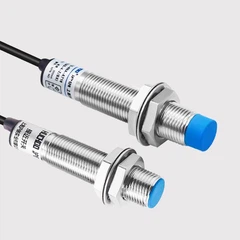
Proximity sensors are used to detect the presence or absence of an object without physical contact. They are commonly used in industrial automation, robotics, and automotive applications. There are several types of proximity sensors available, including inductive sensors, capacitive sensors, and photoelectric sensors. Each type of proximity sensor has its own unique features and advantages, so it's important to choose the one that best suits your needs.
Popular Sensors in the Market
As a sensor supplier, I have experience working with a wide range of sensors from different manufacturers. Here are some of the popular sensors in the market that I recommend:
IE5338 Sensor
The IE5338 Sensor is a high-performance inductive sensor that is designed for use in industrial automation applications. It features a compact design, high sensitivity, and a long sensing range. The IE5338 Sensor is also resistant to EMI and vibration, making it suitable for use in harsh environments.
E2B-M12KN08-WZ-B1 Sensor
The E2B-M12KN08-WZ-B1 Sensor is a reliable capacitive sensor that is designed for use in a wide range of applications, including level detection, object detection, and presence sensing. It features a high sensitivity, a long sensing range, and a compact design. The E2B-M12KN08-WZ-B1 Sensor is also resistant to EMI and vibration, making it suitable for use in harsh environments.
IL5004 Inductive Sensor
The IL5004 Inductive Sensor is a high-quality inductive sensor that is designed for use in industrial automation applications. It features a long sensing range, high sensitivity, and a compact design. The IL5004 Inductive Sensor is also resistant to EMI and vibration, making it suitable for use in harsh environments.
Conclusion
Choosing the right sensor for your application is a critical decision that can have a significant impact on the performance and efficiency of your process. By understanding your application requirements, considering the operating environment, and choosing the right type of sensor, you can ensure that you select a sensor that meets your needs and provides reliable and accurate measurements. As a sensor supplier, I am committed to providing my customers with the highest quality sensors and the best possible service. If you have any questions or need help choosing the right sensor for your application, please don't hesitate to contact me. I look forward to working with you to find the perfect sensor solution for your needs.
References
- Doebelin, E. O., & Niku, S. M. (2015). Measurement systems: Application and design. McGraw-Hill Education.
- Fraden, J. (2010). Handbook of modern sensors: Physics, designs, and applications. Springer Science & Business Media.
- Liptak, B. G. (2005). Instrument engineer's handbook: Process measurement and analysis. CRC Press.
Send Inquiry