




What are biosensors?
Dec 05, 2025
Leave a message
What are biosensors? Well, let me break it down for you in a way that's easy to understand. I'm a sensor supplier, and I've dealt with all sorts of sensors, including biosensors. So, here's the lowdown.
Biosensors are pretty cool devices. They're designed to detect and measure biological substances or biological processes. Think of them as little detectives in the world of biology. They can sense things like proteins, DNA, cells, and even whole organisms. And they do it in a way that's both accurate and efficient.
How do they work? It's actually quite fascinating. A biosensor typically has three main parts: a biological recognition element, a transducer, and a signal processor. The biological recognition element is like the "nose" of the biosensor. It's what binds to the target substance. For example, if you're trying to detect a specific protein, the recognition element might be an antibody that specifically binds to that protein.
Once the recognition element binds to the target, it causes a change. This change is then picked up by the transducer. The transducer is like the "translator" of the biosensor. It converts the biological change into an electrical, optical, or other type of signal. This signal is then sent to the signal processor, which analyzes it and gives you a readable output.


Let's say you're using a biosensor to detect glucose in your blood. The recognition element might be an enzyme that reacts with glucose. When the enzyme binds to glucose, it causes a chemical reaction that changes the electrical properties of the solution. The transducer then converts this electrical change into a voltage or current signal. The signal processor analyzes this signal and gives you a reading of how much glucose is in your blood.
Now, biosensors have a wide range of applications. In the medical field, they're used for things like diagnosing diseases, monitoring patients, and drug discovery. For example, a biosensor can be used to detect a virus in a patient's blood sample. This can help doctors diagnose the disease quickly and start treatment right away.
In the environmental field, biosensors can be used to detect pollutants in water, air, and soil. They can also be used to monitor the health of ecosystems. For example, a biosensor can be used to detect the presence of heavy metals in a river. This can help environmentalists take action to protect the ecosystem.
In the food industry, biosensors are used to ensure the safety and quality of food. They can be used to detect contaminants, such as bacteria and toxins, in food products. For example, a biosensor can be used to detect the presence of E. coli in a batch of meat. This can help food manufacturers prevent foodborne illnesses.
As a sensor supplier, I offer a variety of biosensors and other types of sensors. For example, we have the IE5338 Sensor, which is a high - performance sensor suitable for many industrial applications. It's reliable and accurate, and it can be used in harsh environments.
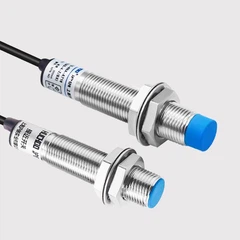
We also have the IL5004 Inductive Sensor. This sensor is great for detecting metal objects. It has a long sensing range and is very durable.
And then there's the E2B - M12KN08 - WZ - B1 Sensor. It's a compact and versatile sensor that can be used in a variety of settings. Whether you're in the medical, environmental, or food industry, this sensor can be a great addition to your toolkit.
If you're in the market for sensors, whether it's biosensors or other types, I'd love to talk to you. We have a team of experts who can help you find the right sensor for your specific needs. We can also provide you with technical support and after - sales service. So, don't hesitate to reach out and start a conversation about your sensor requirements. Whether you're a small business or a large corporation, we're here to serve you.
In conclusion, biosensors are amazing devices with a wide range of applications. They're changing the way we detect and measure biological substances and processes. And as a sensor supplier, I'm excited to be a part of this industry. So, if you're interested in learning more about biosensors or any of our other sensors, just get in touch.
References
- "Biosensors: Fundamentals and Applications" by Andreas L. J. Lichtenberger
- "Principles of Biosensors" by Joseph Wang
- Various industry whitepapers on sensor technology and applications
Send Inquiry