




What are the applications of cylinders in mechanical engineering?
Jan 20, 2026
Leave a message
Hey there! As a cylinder supplier, I've seen firsthand how these nifty little (or not - so - little) devices play a huge role in mechanical engineering. In this blog, I'm gonna break down some of the key applications of cylinders in the field.


1. Manufacturing and Automation
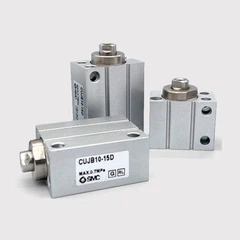
In the world of manufacturing, cylinders are like the unsung heroes. They're used in automated production lines to perform a variety of tasks. For instance, in pick - and - place operations, cylinders can be used to move parts from one location to another with precision. A pneumatic cylinder, like the MGPM12 - 100Z Cylinder, is often used in these types of operations. It's compact, yet powerful enough to handle small - to - medium - sized components.
In assembly lines, cylinders are used to press, clamp, and hold parts together during the assembly process. The CD85N25 - 175 - B Cylinder is a great example. Its robust design and high - force output make it suitable for heavy - duty clamping applications. This ensures that parts are held firmly in place, reducing the chances of misalignment and improving the overall quality of the assembled product.
Another application in manufacturing is in material handling. Conveyor systems often use cylinders to control the movement of goods. They can be used to lift, lower, or divert products along the conveyor. Cylinders help in optimizing the flow of materials, increasing efficiency, and reducing the need for manual labor.
2. Robotics
Robots are becoming more and more common in mechanical engineering, and cylinders are an essential part of their functionality. In robotic arms, cylinders are used to provide the necessary motion. They can control the extension, retraction, and rotation of the arm segments.
For example, in a welding robot, cylinders are used to position the welding torch accurately. The MGPM20 - 125Z Cylinder can be used to move the torch along the welding seam with high precision. This allows for consistent and high - quality welds, which is crucial in industries like automotive and aerospace.
Cylinders also play a role in the stability and balance of robots. They can be used to adjust the position of the robot's base or counterweight, ensuring that the robot remains stable during operation. This is especially important for robots that need to perform tasks in challenging environments or with heavy loads.
3. Automotive Industry
The automotive industry is one of the biggest consumers of cylinders in mechanical engineering. In cars, cylinders are used in a variety of systems. One of the most well - known applications is in the engine. The internal combustion engine uses cylinders to convert the energy from the combustion of fuel into mechanical motion. Each cylinder in the engine has a piston that moves up and down, driving the crankshaft and ultimately powering the vehicle.
But cylinders are not just used in the engine. They're also used in the braking system. Hydraulic cylinders are used to apply pressure to the brake pads, which then clamp down on the brake discs to slow down or stop the vehicle. These cylinders need to be highly reliable and responsive to ensure the safety of the passengers.
In the suspension system, cylinders are used to provide damping and support. They help to absorb shocks and vibrations, providing a smooth and comfortable ride. Pneumatic cylinders can also be used in some advanced suspension systems to adjust the ride height and stiffness of the vehicle.
4. Aerospace Industry
In the aerospace industry, cylinders are used in a wide range of applications. In aircraft, cylinders are used in the landing gear system. Hydraulic cylinders are used to extend and retract the landing gear during takeoff and landing. These cylinders need to be able to withstand high pressures and extreme temperatures, as well as provide reliable operation in all weather conditions.
Cylinders are also used in the flight control surfaces, such as the ailerons, elevators, and rudders. They are used to move these surfaces, which control the aircraft's direction and attitude. Pneumatic or hydraulic cylinders are used to provide the necessary force to move these large and heavy surfaces quickly and accurately.
In spacecraft, cylinders are used in various systems, such as the deployment of solar panels and the operation of robotic arms. They need to be lightweight, yet strong enough to perform their functions in the harsh environment of space.
5. Construction Equipment
Construction equipment like excavators, bulldozers, and cranes rely heavily on cylinders. In an excavator, hydraulic cylinders are used to control the movement of the boom, arm, and bucket. They allow the operator to dig, lift, and move large amounts of earth and other materials with precision.
Cranes use cylinders to extend and retract the boom, as well as to lift and lower heavy loads. The cylinders need to be able to handle high loads and provide smooth and stable operation. Pneumatic cylinders can also be used in some smaller construction equipment for tasks like opening and closing doors or hatches.
Why Choose Our Cylinders?
As a cylinder supplier, we offer a wide range of high - quality cylinders for all these applications. Our cylinders are designed and manufactured to the highest standards, ensuring reliability, durability, and performance. We use the latest technologies and materials to make sure that our cylinders can meet the demands of even the most challenging mechanical engineering projects.
Whether you're in the manufacturing, robotics, automotive, aerospace, or construction industry, we have the right cylinder for you. Our team of experts is always ready to help you choose the best cylinder for your specific needs.
If you're interested in learning more about our cylinders or have a project that requires cylinder solutions, don't hesitate to get in touch. We're here to assist you with your procurement and answer any questions you may have. Let's work together to find the perfect cylinder for your mechanical engineering needs.
References
- "Mechanical Engineering Handbook" by Myer Kutz
- "Automotive Engineering Fundamentals" by Thomas D. Gillespie
- "Aerospace Engineering Principles" by John J. Bertin
Send Inquiry