




What are the testing methods for sensors?
Nov 12, 2025
Leave a message
As a seasoned sensor supplier, I've witnessed firsthand the critical role sensors play in modern industries. From automotive to aerospace, healthcare to home automation, sensors are the unsung heroes that enable devices to interact with the world around them. But how do we ensure these sensors are accurate, reliable, and up to the task? In this blog post, I'll delve into the various testing methods for sensors, sharing insights based on my years of experience in the field.
Electrical Testing
Electrical testing is fundamental to assessing a sensor's performance. It involves measuring electrical parameters such as resistance, capacitance, and voltage to ensure they fall within the specified range. For instance, in a resistive sensor, changes in resistance correspond to changes in the measured quantity, like temperature or pressure. By applying a known voltage and measuring the resulting current, we can calculate the resistance and verify its accuracy.
One common electrical testing method is the two - wire method, which is simple and straightforward. However, it may introduce measurement errors due to the resistance of the connecting wires. To overcome this, the four - wire method is often used, especially for high - precision sensors. In the four - wire method, separate wires are used for current injection and voltage measurement, eliminating the effect of wire resistance.
For capacitive sensors, capacitance measurement is crucial. Capacitance can change based on factors such as proximity, humidity, or the dielectric constant of the surrounding medium. Specialized capacitance meters are used to measure the capacitance accurately. By comparing the measured value with the expected value, we can determine if the sensor is functioning correctly.
Functional Testing
Functional testing focuses on the sensor's ability to perform its intended function. This involves subjecting the sensor to real - world or simulated conditions and observing its output. For example, in a temperature sensor, we can place it in a temperature - controlled environment and measure its output as the temperature changes. The output should follow a predictable pattern, and any deviation from the expected behavior indicates a problem.
In the case of motion sensors, functional testing may involve moving the sensor or an object in its detection range and checking if it can detect the motion accurately. This can be done using a test rig that can simulate different types of motion, such as linear or rotational movement.
For gas sensors, functional testing requires exposing the sensor to known concentrations of the target gas. The sensor's response time, sensitivity, and selectivity are then measured. Response time refers to how quickly the sensor reaches a stable output after being exposed to the gas. Sensitivity is the change in the sensor's output per unit change in the gas concentration, and selectivity is the ability of the sensor to distinguish the target gas from other gases.
Environmental Testing
Sensors often operate in harsh environments, so environmental testing is essential to ensure their reliability. This includes testing for temperature, humidity, vibration, shock, and dust.
Temperature testing involves subjecting the sensor to a wide range of temperatures, from extremely cold to extremely hot. The sensor's performance is monitored at each temperature point to ensure it remains stable. For example, some sensors may experience a shift in their output characteristics at low temperatures, which can affect their accuracy.
Humidity testing is crucial for sensors that are sensitive to moisture. High humidity can cause corrosion, short - circuits, or changes in the sensor's electrical properties. By exposing the sensor to different humidity levels and monitoring its performance, we can determine its resistance to moisture.
Vibration and shock testing simulate the mechanical stresses that sensors may encounter during transportation or operation. Vibration testing involves subjecting the sensor to continuous vibrations at different frequencies and amplitudes. Shock testing, on the other hand, involves applying sudden impacts to the sensor. These tests help identify any mechanical weaknesses in the sensor that could lead to failure.
Dust testing exposes the sensor to a controlled amount of dust to evaluate its resistance to dust ingress. Dust can clog the sensor's sensing element or interfere with its operation. By measuring the sensor's performance before and after the dust exposure, we can assess its dust - resistance capabilities.
Calibration Testing
Calibration testing is the process of adjusting the sensor's output to match a known standard. This is necessary to ensure the accuracy of the sensor's measurements. Calibration is typically performed using a reference sensor or a calibration device with a known accuracy.
The calibration process involves comparing the sensor's output with the output of the reference sensor under the same conditions. If there is a difference, the sensor is adjusted until its output matches the reference. This adjustment may involve changing the sensor's gain, offset, or other parameters.
Calibration should be performed regularly, especially for sensors that are used in critical applications. Over time, factors such as aging, environmental conditions, and wear and tear can cause the sensor's performance to drift. Regular calibration helps maintain the sensor's accuracy and reliability.
Comparison with Similar Sensors
Another effective testing method is to compare the sensor with similar sensors of known quality. This can help identify any unique issues with the sensor under test. For example, if we have a batch of newly manufactured sensors, we can select a few sensors from the batch and compare their performance with a reference sensor.
By comparing the output, response time, and other performance parameters, we can quickly identify if there are any outliers in the batch. If a particular sensor shows significantly different performance compared to the others, it may require further investigation or replacement.
Testing Our Sensors
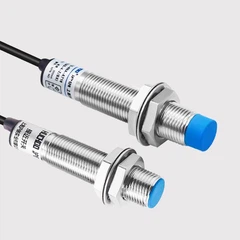
At our company, we use a combination of these testing methods to ensure the quality of our sensors. For example, our E2B - M12KN08 - WZ - B1 Sensor undergoes rigorous electrical, functional, and environmental testing. We use the four - wire method for electrical testing to ensure high - precision resistance measurement. Functional testing involves simulating different operating conditions to verify its performance. Environmental testing includes temperature, humidity, and vibration testing to ensure its reliability in harsh environments.
Our IE5338 Sensor is also subjected to comprehensive testing. For this sensor, which is often used in motion - detection applications, we use a specialized test rig to simulate different types of motion and check its detection accuracy. Calibration testing is performed regularly to maintain its precision.
The 0J5136 Sensor is tested for its gas - sensing capabilities. We expose it to known concentrations of the target gas and measure its response time, sensitivity, and selectivity. Environmental testing is also carried out to ensure its performance in different environmental conditions.
Conclusion
Testing sensors is a multi - faceted process that involves electrical, functional, environmental, calibration, and comparative testing. By using these methods, we can ensure that our sensors are accurate, reliable, and capable of performing in various applications.


If you're in the market for high - quality sensors, we invite you to contact us for a detailed discussion about your requirements. Our team of experts is ready to assist you in selecting the right sensors for your application and can provide you with all the necessary technical support. Whether you need sensors for industrial automation, automotive, or consumer electronics, we have the solutions you need.
References
- "Sensor Technology Handbook" by Jon Wilson
- "Fundamentals of Sensors" by Andreas Hierlemann and Herbert Baltes
- Industry standards and guidelines for sensor testing from relevant organizations such as ISO and IEEE.
Send Inquiry