




What are the uses of force sensors?
Jan 01, 2026
Leave a message
Force sensors are pretty amazing devices that have found their way into a ton of different applications. As a sensor supplier, I've seen firsthand how these little gadgets can make a huge difference in various industries. So, let's dive into the many uses of force sensors.
Industrial Automation
In the world of industrial automation, force sensors are like the unsung heroes. They play a crucial role in ensuring that manufacturing processes run smoothly and efficiently. For example, in robotic assembly lines, force sensors are used to measure the force applied by robotic arms during the assembly process. This helps in preventing over - tightening or under - tightening of screws and bolts. If a robot is assembling a smartphone, a force sensor can ensure that the components are fastened just right, avoiding any damage to the delicate parts.
Another use in industrial automation is in quality control. Force sensors can be integrated into testing machines to measure the strength and durability of products. For instance, when testing the tensile strength of a metal rod, a force sensor can accurately measure the amount of force required to break the rod. This data is then used to determine if the product meets the required quality standards.
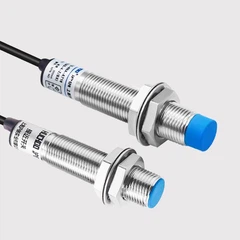
We offer some great sensors for industrial automation, like the E3JK - RR11 - C 2M OMS Sensor. It's a reliable sensor that can be used in various industrial applications to detect the presence or absence of objects based on the force exerted on it.


Automotive Industry
The automotive industry is another area where force sensors are widely used. One of the most common applications is in airbag systems. Force sensors are placed in the seats and seat belts to detect the weight and position of the passengers. This information is then used to determine whether to deploy the airbags and with what force. For example, if a small child is sitting in the seat, the airbag system can adjust the deployment force to prevent injury.
Force sensors are also used in braking systems. They can measure the force applied to the brake pedal by the driver and transmit this information to the vehicle's electronic control unit. The control unit then adjusts the braking force accordingly, ensuring a smooth and safe stop.
In the area of automotive safety and performance, our IL5004 Inductive Sensor can be a great addition. It can be used to detect the movement and position of various automotive components, which is crucial for the proper functioning of the vehicle.
Medical Field
Force sensors have revolutionized the medical field in many ways. In surgical instruments, force sensors are used to provide surgeons with real - time feedback on the force they are applying. This is especially important in minimally invasive surgeries, where precision is key. For example, in laparoscopic surgeries, force sensors can be integrated into the surgical tools to help the surgeon perform delicate procedures without causing unnecessary damage to the surrounding tissues.
In prosthetics, force sensors are used to make artificial limbs more functional and natural - feeling. They can detect the force exerted by the user and adjust the movement of the prosthetic limb accordingly. This allows amputees to perform tasks with more ease and precision.
Our E2B - M12KN08 - WZ - B1 Sensor can be a great option for medical applications. Its high precision and reliability make it suitable for use in various medical devices.
Consumer Electronics
Force sensors have also made their way into consumer electronics. Smartphones are a prime example. Many modern smartphones are equipped with force - sensitive displays. These displays can detect the amount of pressure applied by the user's finger, allowing for new and innovative interaction methods. For example, a light tap might perform one action, while a harder press could perform another.
Wearable devices like smartwatches also use force sensors. They can be used to detect the force applied when the user taps on the screen or interacts with the device in other ways. This helps in providing a more intuitive user experience.
Aerospace Industry
In the aerospace industry, force sensors are used for a variety of purposes. They are used in aircraft wings to measure the aerodynamic forces acting on the wings during flight. This data is then used to optimize the design of the wings and improve the aircraft's performance.
Force sensors are also used in the landing gear of aircraft. They can measure the force exerted on the landing gear during takeoff and landing, ensuring that the landing gear can withstand the stresses of flight.
Robotics
Robots are becoming more and more advanced, and force sensors are an important part of their development. In human - robot interaction, force sensors allow robots to sense the force applied by humans. This is crucial for tasks like collaborative manufacturing, where robots and humans work together. For example, a robot can sense the force applied by a human operator when guiding it to perform a specific task, and adjust its actions accordingly.
In mobile robots, force sensors are used for navigation and obstacle avoidance. They can detect the force exerted when the robot comes into contact with an object, allowing the robot to change its path and avoid collisions.
Conclusion
As you can see, force sensors have a wide range of uses across different industries. From industrial automation to consumer electronics, these sensors are making our lives easier and more efficient. Whether you're in the automotive industry looking for a reliable sensor for your airbag system, or in the medical field needing a high - precision sensor for a surgical instrument, we've got you covered.
If you're interested in learning more about our force sensors or are looking to make a purchase for your business, we'd love to have a chat with you. Just reach out to us, and we can discuss your specific needs and find the perfect sensor solution for you.
References
- Smith, J. (2020). Force Sensors in Industrial Automation. Journal of Industrial Technology, 15(2), 45 - 52.
- Johnson, A. (2019). Applications of Force Sensors in the Automotive Industry. Automotive Engineering Review, 22(3), 67 - 74.
- Brown, C. (2021). Force Sensors in Medical Devices. Medical Technology Journal, 18(4), 89 - 96.
Send Inquiry