


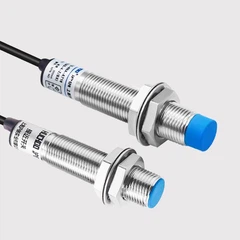


What is a magnetic sensor?
Nov 26, 2025
Leave a message
A magnetic sensor is a device that detects the presence, strength, or direction of a magnetic field. These sensors have become an integral part of modern technology, finding applications in a wide range of industries from automotive and consumer electronics to industrial automation and aerospace. As a sensor supplier, I am excited to delve into the world of magnetic sensors, exploring their types, working principles, applications, and the products we offer.
Types of Magnetic Sensors
There are several types of magnetic sensors, each with its own unique operating principle and application.
Hall Effect Sensors
Hall effect sensors are one of the most common types of magnetic sensors. They operate based on the Hall effect, which was discovered by Edwin Hall in 1879. When a magnetic field is applied perpendicular to the flow of current in a conductor or semiconductor, a voltage is generated perpendicular to both the current and the magnetic field. This voltage, known as the Hall voltage, is proportional to the strength of the magnetic field.
Hall effect sensors are widely used in automotive applications, such as wheel speed sensors, throttle position sensors, and anti - lock braking systems (ABS). They are also used in consumer electronics for detecting the opening and closing of laptop lids or the position of a smartphone's flip cover.
Magnetoresistive Sensors
Magnetoresistive sensors work on the principle that the electrical resistance of a material changes when it is exposed to a magnetic field. There are different types of magnetoresistive sensors, including anisotropic magnetoresistive (AMR), giant magnetoresistive (GMR), and tunneling magnetoresistive (TMR) sensors.
AMR sensors are relatively simple and have been used in applications such as compasses in mobile devices. GMR and TMR sensors offer higher sensitivity and are used in more advanced applications, such as hard disk drives for reading data from the magnetic disks and in magnetic field sensing in industrial automation.
Inductive Sensors
Inductive sensors detect the presence of a magnetic field by generating an induced electromotive force (EMF) in a coil. When a magnetic field changes near the coil, an EMF is induced according to Faraday's law of electromagnetic induction.
Inductive sensors are commonly used in industrial applications for detecting the position of metal objects, such as in conveyor systems, machine tools, and robotic arms. They are also used in proximity switches to detect the presence or absence of a target object.
Working Principles
The working principle of a magnetic sensor depends on its type. For Hall effect sensors, as mentioned earlier, the Hall voltage is generated when a magnetic field interacts with the current - carrying material. The sensor measures this voltage and converts it into a digital or analog signal that can be used by other electronic components.
Magnetoresistive sensors measure the change in resistance of the sensing material. The resistance change is then converted into a voltage signal using appropriate circuitry. This voltage signal can be further processed to determine the strength and direction of the magnetic field.
Inductive sensors rely on the generation of an induced EMF in a coil. The magnitude of the induced EMF is related to the rate of change of the magnetic field. By measuring this EMF, the sensor can detect the presence or movement of a magnetic or metallic object.
Applications
Magnetic sensors have a vast number of applications across different industries.
Automotive Industry
In the automotive industry, magnetic sensors are used for a variety of functions. Wheel speed sensors, which are often based on Hall effect or inductive principles, are crucial for the operation of ABS and traction control systems. These sensors measure the rotational speed of the wheels and provide feedback to the vehicle's control system to prevent wheel lock - up during braking or loss of traction during acceleration.
Throttle position sensors, which can be Hall effect sensors, measure the position of the throttle valve, allowing the engine control unit (ECU) to adjust the fuel injection and ignition timing for optimal engine performance.
Consumer Electronics
In consumer electronics, magnetic sensors are used for enhancing user experience and functionality. Smartphones often use magnetoresistive sensors as digital compasses, enabling navigation applications to determine the device's orientation. Laptops and tablets use Hall effect sensors to detect when the lid is closed, putting the device into sleep mode to save power.
Industrial Automation
Industrial automation relies heavily on magnetic sensors for process control and monitoring. Inductive sensors are used to detect the position of moving parts in machinery, ensuring accurate operation and preventing collisions. Magnetic sensors are also used in conveyor systems to detect the presence of products, allowing for automated sorting and packaging.
Aerospace
In the aerospace industry, magnetic sensors are used for attitude control, navigation, and detecting the position of moving parts in aircraft and spacecraft. They are also used in magnetic anomaly detection systems to detect changes in the Earth's magnetic field, which can be used for geological surveys and military applications.
Our Sensor Products
As a sensor supplier, we offer a wide range of high - quality magnetic sensors to meet the diverse needs of our customers.
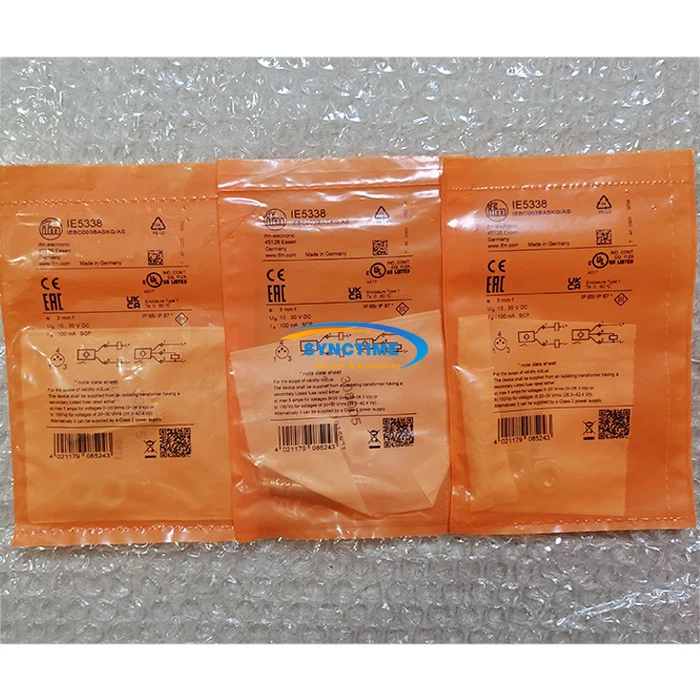
One of our popular products is the IE5338 Sensor. This sensor is a highly reliable inductive sensor that is suitable for industrial automation applications. It has a long sensing range and can detect the presence of metal objects with high accuracy.
The E2B - M12KN08 - WZ - B1 Sensor is a Hall effect sensor that is commonly used in automotive and consumer electronics applications. It offers excellent sensitivity and is designed to operate in harsh environments.

We also offer the 0J5136 Sensor, which is a magnetoresistive sensor. This sensor is ideal for applications that require high - precision magnetic field sensing, such as in scientific research and advanced industrial control systems.
Why Choose Our Sensors
Our sensors are designed and manufactured with the highest quality standards. We use advanced materials and manufacturing processes to ensure the reliability and performance of our products. Our sensors are also highly customizable, allowing us to meet the specific requirements of our customers.
We have a team of experienced engineers who can provide technical support and assistance throughout the entire process, from product selection to installation and maintenance. Whether you are a small - scale manufacturer or a large - scale industrial enterprise, we can offer you the right sensor solutions for your needs.
Contact Us for Procurement
If you are interested in our magnetic sensors or have any questions about our products, we encourage you to contact us for procurement and further discussions. Our team is ready to assist you in finding the best sensor solutions for your applications. We can provide detailed product information, technical specifications, and pricing based on your specific requirements.
References
- "Magnetic Sensors and Magnetometers" by David Jiles.
- "Handbook of Modern Sensors: Physics, Designs, and Applications" by Jacob Fraden.
- IEEE Transactions on Magnetics for research papers on magnetic sensor technology.
Send Inquiry