




What is the shutdown time of MY2N - D2?
Nov 10, 2025
Leave a message
As a supplier of the MY2N - D2 relay, I often encounter inquiries from customers regarding its shutdown time. Understanding the shutdown time of the MY2N - D2 is crucial for various industrial applications, as it directly impacts the efficiency and safety of electrical systems. In this blog post, I will delve into the concept of shutdown time, factors influencing it, and how it relates to the MY2N - D2.
What is Shutdown Time?
Shutdown time, also known as release time in the context of relays, refers to the time interval from the moment the control signal is removed from the relay coil to the moment the contacts of the relay return to their original state. In the case of the MY2N - D2, which is a general - purpose relay, the shutdown time is an important parameter that determines how quickly the relay can stop conducting current once the control signal is cut off.
The shutdown time is typically measured in milliseconds (ms). A shorter shutdown time means that the relay can respond more rapidly to changes in the control signal, which is essential in applications where quick disconnection of electrical circuits is required for safety or operational reasons.
Factors Affecting the Shutdown Time of MY2N - D2
Several factors can influence the shutdown time of the MY2N - D2 relay.
Coil Characteristics
The design and properties of the relay coil play a significant role in determining the shutdown time. The inductance of the coil affects the rate at which the magnetic field collapses when the control current is removed. A coil with higher inductance will take longer for the magnetic field to dissipate, resulting in a longer shutdown time. The resistance of the coil also impacts the current decay rate, which in turn affects the time it takes for the contacts to open.
Contact Material and Design
The material used for the relay contacts and their physical design can affect the shutdown time. Different contact materials have different electrical and mechanical properties. For example, some materials may have a higher tendency to stick together due to arcing or welding during operation, which can increase the shutdown time. The shape and size of the contacts also influence the force required to separate them and the speed at which they can return to their original position.
Load Conditions
The electrical load connected to the relay contacts can have an impact on the shutdown time. High - current or high - voltage loads can cause arcing when the contacts open, which can delay the separation of the contacts. Additionally, the nature of the load, such as whether it is inductive or resistive, can affect the current - interruption process. Inductive loads, like motors or transformers, store energy in their magnetic fields, and this energy needs to be dissipated when the circuit is broken, which can increase the shutdown time.
Typical Shutdown Time of MY2N - D2
The MY2N - D2 relay has a relatively short shutdown time, which makes it suitable for a wide range of applications. Under normal operating conditions, the shutdown time of the MY2N - D2 is typically in the range of a few milliseconds. However, it is important to note that the actual shutdown time can vary depending on the factors mentioned above.
To ensure accurate performance, it is recommended to refer to the manufacturer's datasheet for the specific shutdown time values of the MY2N - D2 under different operating conditions. The datasheet provides detailed information about the relay's electrical and mechanical characteristics, including the typical and maximum shutdown times.
Importance of Shutdown Time in Applications
The shutdown time of the MY2N - D2 is of great importance in various industrial and electrical applications.
Safety - Critical Systems
In safety - critical systems, such as emergency stop circuits or over - current protection systems, a short shutdown time is essential. For example, in an industrial machine, if there is an over - current situation, the relay needs to quickly disconnect the power supply to prevent damage to the equipment and ensure the safety of the operators. A relay with a long shutdown time may not be able to respond fast enough, leading to potential hazards.

Control and Automation Systems
In control and automation systems, relays are used to switch electrical circuits based on control signals. A short shutdown time allows for more precise and rapid control of the system. For instance, in a programmable logic controller (PLC) system, the MY2N - D2 relays can be used to control the operation of different components. A quick shutdown time ensures that the system can respond promptly to changes in the control program, improving the overall efficiency and performance of the automation system.
Comparison with Other Relays
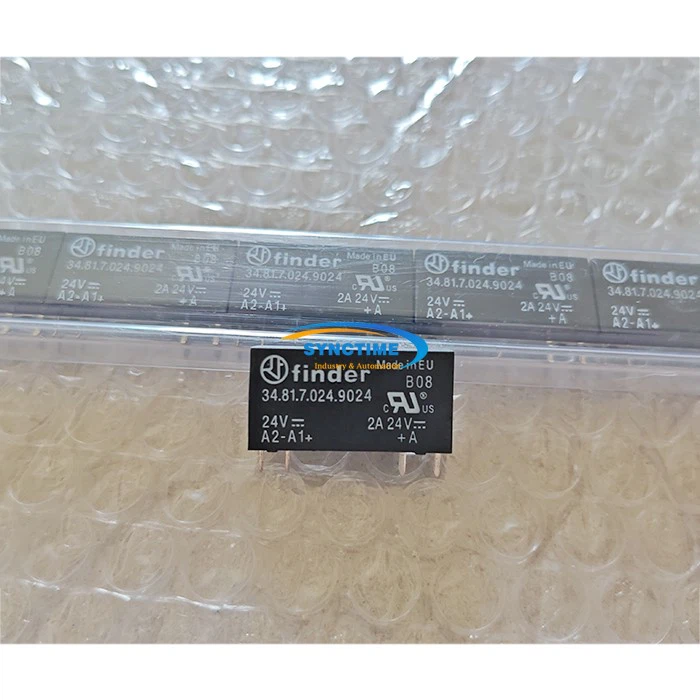
When considering the shutdown time, it can be useful to compare the MY2N - D2 with other relays in the market. For example, the 38.51.7.024.0050 Relay and the 34.81.7.024.9024 Relay are also popular relays used in similar applications. Each relay has its own unique characteristics, including shutdown time.
The shutdown time of these relays may vary depending on their design and intended use. By comparing the shutdown times of different relays, customers can make more informed decisions about which relay is most suitable for their specific application requirements.
Optimizing the Shutdown Time
If you are using the MY2N - D2 in an application where a shorter shutdown time is desired, there are several steps you can take to optimize its performance.
Proper Coil Driving
Using the correct voltage and current to drive the relay coil can help ensure that the magnetic field collapses quickly when the control signal is removed. Make sure to follow the manufacturer's recommendations for the coil voltage and current ratings.
Contact Maintenance
Regular maintenance of the relay contacts can help reduce the risk of contact sticking and arcing, which can increase the shutdown time. This may include cleaning the contacts periodically and checking for signs of wear or damage.
Load Management
Properly managing the electrical load connected to the relay can also help optimize the shutdown time. For inductive loads, using snubber circuits or other protective devices can help dissipate the stored energy more quickly and reduce the arcing when the contacts open.
Conclusion
In conclusion, the shutdown time of the MY2N - D2 relay is an important parameter that affects its performance in various applications. Understanding the factors that influence the shutdown time and how to optimize it can help ensure the efficient and safe operation of electrical systems.
As a supplier of the MY2N - D2, I am committed to providing high - quality relays and technical support to our customers. If you have any questions about the MY2N - D2 or its shutdown time, or if you are interested in purchasing our relays for your application, please feel free to contact me for further discussion and procurement negotiation.
References
- Manufacturer's datasheet of MY2N - D2 relay
- Technical literature on relay operation and characteristics
- Industry standards and guidelines for electrical relays
Send Inquiry