




What is the viewing angle of the KTP700 display?
Jan 12, 2026
Leave a message
The viewing angle of a display is a crucial factor, especially in industrial settings where operators need to interact with the device from various positions. As a supplier of the KTP700 display, I often receive inquiries about its viewing angle. In this blog post, I'll delve into what the viewing angle of the KTP700 display is, why it matters, and how it compares to other similar products in the market.
What is the Viewing Angle?
The viewing angle of a display refers to the maximum angle at which a user can view the screen from either side, above, or below while still maintaining acceptable image quality. Acceptable image quality typically means that the colors, contrast, and brightness of the display remain relatively consistent and the content on the screen is still legible.
For the KTP700 display, it offers a horizontal viewing angle of approximately 160 degrees and a vertical viewing angle of around 140 degrees. This means that an operator can view the screen from a wide range of positions without experiencing significant degradation in image quality. Whether they are standing directly in front of the display, slightly to the side, or looking down at it from a reasonable height, they can still clearly see the information presented on the screen.
Why the Viewing Angle Matters
In industrial environments, the importance of a wide viewing angle cannot be overstated. Here are some reasons why:
Multiple Operators
In many industrial settings, multiple operators may need to view the same display at the same time. For example, in a control room, several technicians might be monitoring the status of a manufacturing process on the KTP700 display. A wide viewing angle ensures that all operators can see the screen clearly, regardless of their position around the display.
Flexibility in Installation
Industrial displays are often installed in various locations and orientations. They may be mounted on walls, consoles, or machinery. A display with a wide viewing angle allows for more flexibility in installation. It can be installed at different heights and angles, and operators can still view the screen effectively. For instance, if the KTP700 is installed on a machine at an elevated position, operators on the ground can still look up and see the screen clearly due to its wide vertical viewing angle.
Reduced Eye Strain
When operators have to constantly adjust their position to view a display with a narrow viewing angle, it can lead to eye strain and fatigue. A wide viewing angle like that of the KTP700 allows operators to view the screen comfortably from their natural positions, reducing the need for constant repositioning and thus minimizing eye strain.

Comparison with Other Similar Products
To better understand the significance of the KTP700's viewing angle, let's compare it with some other popular industrial touch screens in the market.
GLC2300-LG41-24V Touch Screen
The GLC2300-LG41-24V Touch Screen has a horizontal viewing angle of about 150 degrees and a vertical viewing angle of around 130 degrees. While it also offers a relatively wide viewing angle, the KTP700 has a slight edge with its wider horizontal and vertical viewing angles. This means that in scenarios where operators need to view the screen from extreme positions, the KTP700 may provide better visibility.
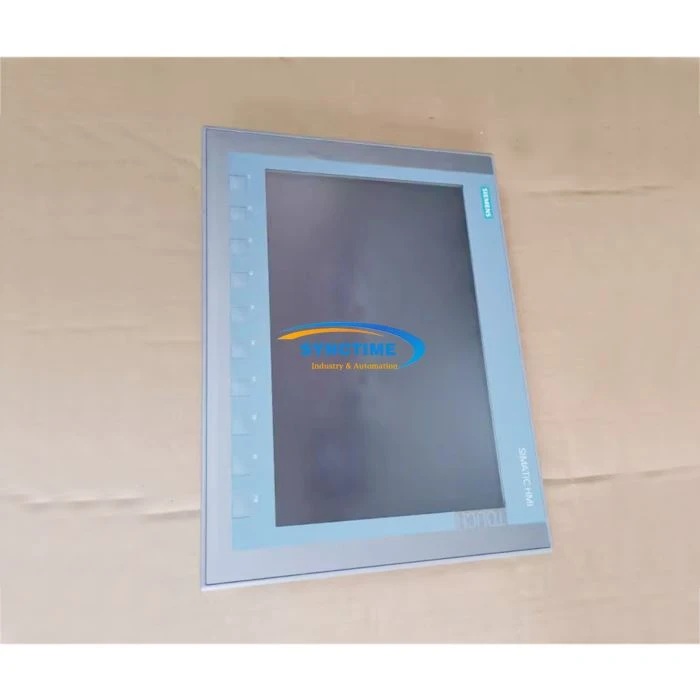
6AV2123-2MB03-0AX0 HMI KTP1200 Basic Panel SIMATIC Siemens
The 6AV2123-2MB03-0AX0 HMI KTP1200 Basic Panel SIMATIC Siemens has similar viewing angles to the KTP700, with a horizontal viewing angle of approximately 160 degrees and a vertical viewing angle of around 140 degrees. However, the KTP700 may be a more suitable choice for applications where space is limited, as it has a smaller form factor while still offering the same excellent viewing angles.
A951GOT-SBD Touch Screen
The A951GOT-SBD Touch Screen has a horizontal viewing angle of 140 degrees and a vertical viewing angle of 120 degrees. Compared to the KTP700, it has a narrower viewing angle. This may result in more restricted viewing positions for operators, especially when they need to view the screen from the side or from an elevated position.
Technical Factors Affecting the Viewing Angle
The viewing angle of a display is influenced by several technical factors. For the KTP700, the following factors contribute to its wide viewing angle:
LCD Technology
The KTP700 uses advanced liquid crystal display (LCD) technology. LCDs work by controlling the orientation of liquid crystals to allow or block light. The design of the LCD in the KTP700 is optimized to ensure that light is evenly distributed over a wide range of viewing angles. This is achieved through the use of special polarizers and alignment layers that help maintain the clarity and color accuracy of the display even when viewed from the side.
Backlighting
The backlighting system in the KTP700 also plays a role in its wide viewing angle. A well-designed backlighting system ensures that the screen is evenly illuminated from all angles. The KTP700 uses a high-quality backlight that provides uniform brightness across the entire screen, regardless of the viewing position. This helps to maintain the visibility of the display even when viewed from extreme angles.
Applications Benefiting from the Wide Viewing Angle
The wide viewing angle of the KTP700 makes it suitable for a variety of industrial applications. Here are some examples:
Manufacturing
In manufacturing plants, the KTP700 can be used to monitor the status of production lines, control machinery, and display real-time data. Operators can view the screen from different positions on the factory floor, such as near the machines or from a control room. The wide viewing angle ensures that they can always see the information they need, regardless of their location.
Process Control
In process control applications, such as in chemical plants or power generation facilities, the KTP700 can be used to display critical process parameters. Multiple operators may need to view the display simultaneously to monitor the process and make decisions. The wide viewing angle allows all operators to have a clear view of the screen, facilitating effective communication and decision-making.
Transportation
In transportation applications, such as in trains or buses, the KTP700 can be used for passenger information displays or for monitoring the status of the vehicle. Passengers or operators can view the screen from different seats or positions, and the wide viewing angle ensures that they can easily read the information on the display.
Conclusion
The viewing angle of the KTP700 display is an important feature that offers significant advantages in industrial environments. With its wide horizontal and vertical viewing angles, it provides clear visibility from a variety of positions, making it suitable for multiple operators, flexible installation, and reducing eye strain. When compared to other similar products in the market, the KTP700 stands out with its excellent viewing angle performance.
If you are in the market for an industrial display with a wide viewing angle, the KTP700 is definitely worth considering. We, as a supplier of the KTP700, are committed to providing high-quality products and excellent customer service. If you have any questions or are interested in purchasing the KTP700, please feel free to contact us for a detailed discussion and to explore how this display can meet your specific needs.
References
- Manufacturer's specifications for the KTP700 display.
- Technical documentation for the GLC2300-LG41-24V Touch Screen, 6AV2123-2MB03-0AX0 HMI KTP1200 Basic Panel SIMATIC Siemens, and A951GOT-SBD Touch Screen.
- Industry research on the importance of viewing angles in industrial displays.
Send Inquiry