




What are magnetic sensors?
Jan 15, 2026
Leave a message
Magnetic sensors are devices that detect changes in magnetic fields and convert these changes into electrical signals. They play a crucial role in a wide range of applications, from industrial automation to consumer electronics and automotive systems. As a sensor supplier, I'm excited to delve into the world of magnetic sensors, exploring their types, working principles, applications, and why they are essential in modern technology.
Types of Magnetic Sensors
There are several types of magnetic sensors, each with its unique characteristics and applications. The most common types include Hall effect sensors, magnetoresistive sensors, and fluxgate sensors.
Hall Effect Sensors
Hall effect sensors are based on the Hall effect, a phenomenon discovered by Edwin Hall in 1879. When a magnetic field is applied perpendicular to the current flow in a conductor or semiconductor, a voltage is generated perpendicular to both the current and the magnetic field. This voltage, known as the Hall voltage, is proportional to the strength of the magnetic field.
Hall effect sensors are widely used in various applications, such as position sensing, speed detection, and current measurement. They are known for their simplicity, reliability, and low cost. For example, in automotive applications, Hall effect sensors are used to detect the position of the crankshaft and camshaft, which is essential for engine timing and fuel injection control.
Magnetoresistive Sensors
Magnetoresistive sensors rely on the magnetoresistive effect, which is the change in electrical resistance of a material in the presence of a magnetic field. There are different types of magnetoresistive sensors, including anisotropic magnetoresistive (AMR), giant magnetoresistive (GMR), and tunnel magnetoresistive (TMR) sensors.
AMR sensors are the simplest type of magnetoresistive sensors and are commonly used in compass applications and magnetic encoders. GMR and TMR sensors, on the other hand, offer higher sensitivity and better performance, making them suitable for more demanding applications, such as hard disk drives and magnetic field imaging.
Fluxgate Sensors
Fluxgate sensors are highly sensitive magnetic sensors that can measure both the magnitude and direction of a magnetic field. They work by using a ferromagnetic core that is driven into saturation by an alternating current. When an external magnetic field is applied, it modifies the saturation level of the core, which in turn changes the output signal of the sensor.
Fluxgate sensors are commonly used in applications that require high precision and low noise, such as geophysical surveys, navigation systems, and magnetic anomaly detection.
Working Principles
The working principle of a magnetic sensor depends on its type. As mentioned earlier, Hall effect sensors generate a voltage proportional to the magnetic field strength, while magnetoresistive sensors change their electrical resistance in the presence of a magnetic field. Fluxgate sensors, on the other hand, measure the magnetic field by detecting changes in the saturation level of a ferromagnetic core.
Regardless of the type, all magnetic sensors share a common goal: to convert a magnetic field into an electrical signal that can be processed by a microcontroller or other electronic devices. This electrical signal can then be used to determine the presence, strength, or direction of the magnetic field, depending on the application.
Applications
Magnetic sensors have a wide range of applications in various industries. Here are some of the most common applications:
Industrial Automation
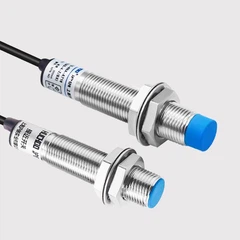
In industrial automation, magnetic sensors are used for position sensing, speed detection, and proximity sensing. For example, they can be used to detect the position of a robot arm, the speed of a conveyor belt, or the presence of a workpiece on a production line. 0J5136 Sensor is a great example of a magnetic sensor commonly used in industrial automation applications. It offers high precision and reliability, making it suitable for demanding industrial environments.
Automotive Industry
The automotive industry is one of the largest consumers of magnetic sensors. They are used in a variety of applications, including engine management, anti-lock braking systems (ABS), and electronic stability control (ESC). E2B-M12KN08-WZ-B1 Sensor is a popular magnetic sensor used in automotive applications. It provides accurate and reliable sensing, helping to improve the safety and performance of vehicles.


Consumer Electronics
In consumer electronics, magnetic sensors are used in smartphones, tablets, and wearables for various purposes, such as compass functionality, gesture recognition, and proximity sensing. For example, the magnetometer in a smartphone uses a magnetic sensor to detect the Earth's magnetic field, which allows the device to determine its orientation. IE5338 Sensor is a high-performance magnetic sensor that can be used in consumer electronics applications, offering excellent sensitivity and low power consumption.
Healthcare
Magnetic sensors are also used in the healthcare industry for applications such as magnetic resonance imaging (MRI), magnetic drug delivery, and biosensing. In MRI, magnetic sensors are used to detect the magnetic fields generated by the patient's body, which allows doctors to create detailed images of internal organs and tissues.
Advantages of Magnetic Sensors
There are several advantages of using magnetic sensors in various applications:
- Non-contact Sensing: Magnetic sensors can detect magnetic fields without physical contact, which makes them suitable for applications where contact sensing is not possible or desirable.
- High Sensitivity: Many magnetic sensors offer high sensitivity, allowing them to detect even small changes in magnetic fields.
- Reliability: Magnetic sensors are generally reliable and have a long lifespan, making them suitable for use in harsh environments.
- Low Power Consumption: Some magnetic sensors, such as Hall effect sensors, consume very little power, which is important for battery-powered devices.
Why Choose Our Magnetic Sensors
As a sensor supplier, we offer a wide range of high-quality magnetic sensors that are designed to meet the needs of various industries. Our sensors are known for their reliability, accuracy, and performance. We also provide excellent customer service and technical support, ensuring that our customers get the most out of our products.
Whether you are looking for a magnetic sensor for industrial automation, automotive, consumer electronics, or healthcare applications, we have the right solution for you. Our team of experts can help you choose the best sensor for your specific requirements and provide you with all the necessary information and support.
Contact Us for Purchasing and Negotiation
If you are interested in purchasing our magnetic sensors or have any questions about our products, please feel free to contact us. We are always ready to assist you and look forward to discussing your sensor needs. Our experienced sales team will work closely with you to understand your requirements and provide you with the best possible solutions.
References
- "Magnetic Sensors and Magnetometers" by David Jiles
- "Handbook of Modern Sensors: Physics, Designs, and Applications" by Jacob Fraden
Send Inquiry