




What is the anti - interference ability of IE5338?
Jan 15, 2026
Leave a message
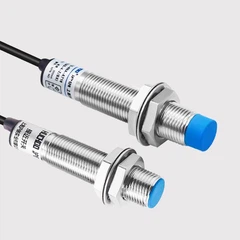
In the ever - evolving landscape of industrial sensors, anti - interference ability stands as a crucial parameter that determines the reliability and accuracy of sensor performance. As a supplier of the IE5338 Sensor, I am often asked about the anti - interference capabilities of this remarkable device. In this blog post, I will delve into the details of what the anti - interference ability of the IE5338 entails, and why it matters in industrial applications.
Understanding Anti - interference in Sensors
Before we specifically discuss the IE5338, it is essential to understand what anti - interference means in the context of sensors. Industrial environments are rife with various forms of interference, including electromagnetic interference (EMI), radio - frequency interference (RFI), and electrical noise. These interferences can disrupt the normal operation of sensors, leading to inaccurate readings, false alarms, and even system failures.
Anti - interference ability refers to a sensor's capacity to resist these external disturbances and maintain stable and accurate performance. A sensor with high anti - interference ability can operate reliably in harsh industrial settings, ensuring that the data it collects is trustworthy and the processes it controls are efficient.
The Anti - interference Design of IE5338
The IE5338 Sensor is engineered with several features that contribute to its outstanding anti - interference ability.
1. Advanced Shielding Technology
One of the primary ways the IE5338 combats interference is through its advanced shielding technology. The sensor is equipped with a high - quality metal shield that effectively blocks external electromagnetic fields. This shield acts as a barrier, preventing EMI and RFI from penetrating the sensor's internal components and affecting its operation. For example, in industrial plants where large motors and power equipment generate strong electromagnetic fields, the shielding of the IE5338 ensures that the sensor remains unaffected and continues to provide accurate measurements.
2. Filtering Circuits
Another key aspect of the IE5338's anti - interference design is its built - in filtering circuits. These circuits are designed to filter out unwanted electrical noise and interference signals. They can distinguish between the useful signals generated by the target object and the background noise, allowing the sensor to focus on the relevant information. For instance, in a noisy production line with multiple sensors and electrical devices, the filtering circuits of the IE5338 can eliminate the interference caused by other sensors or electrical equipment, ensuring that the sensor's output is clean and reliable.
3. Signal Processing Algorithms
The IE5338 also employs sophisticated signal processing algorithms to enhance its anti - interference ability. These algorithms can analyze the incoming signals in real - time, identify and reject interference signals, and correct any errors caused by interference. For example, if the sensor detects a sudden spike in the signal that is likely to be caused by interference, the algorithm can automatically adjust the signal processing parameters to compensate for the interference and maintain the accuracy of the measurement.
Comparing with Other Sensors
To better understand the anti - interference ability of the IE5338, it is useful to compare it with other sensors in the market. Take the IL5004 Inductive Sensor and the E2B - M12KN08 - WZ - B1 Sensor as examples.
The IL5004 Inductive Sensor is a popular sensor in industrial applications. While it has decent anti - interference performance, the IE5338 outperforms it in terms of shielding effectiveness and signal processing. The advanced shielding of the IE5338 provides better protection against strong electromagnetic fields, and its signal processing algorithms are more robust in filtering out complex interference signals.
The E2B - M12KN08 - WZ - B1 Sensor is also a well - known sensor. However, compared to the IE5338, it has relatively limited anti - interference features. The IE5338's filtering circuits are more advanced, allowing it to handle a wider range of interference frequencies and provide more stable performance in noisy environments.
Applications Benefiting from IE5338's Anti - interference Ability
The high anti - interference ability of the IE5338 makes it suitable for a wide range of industrial applications.


1. Automotive Manufacturing
In automotive manufacturing plants, there are numerous electrical and mechanical devices that generate significant interference. The IE5338 can be used for object detection, position sensing, and quality control on the production line. Its anti - interference ability ensures that it can accurately detect parts and components, even in the presence of strong electromagnetic fields generated by welding machines, robots, and other equipment.
2. Food and Beverage Industry
In the food and beverage industry, sensors are often exposed to a variety of interference sources, such as moisture, dust, and electrical noise from packaging machines and conveyor systems. The IE5338's anti - interference features make it ideal for applications such as level sensing in tanks, detection of product presence on conveyors, and monitoring of filling processes. It can operate reliably in these challenging environments, providing accurate and consistent data.
3. Packaging Industry
The packaging industry involves high - speed machinery and a large number of electrical components. The IE5338 can be used for label detection, package counting, and position control. Its ability to resist interference ensures that it can accurately detect and track packages, even in the presence of electrical noise from motors, sensors, and control systems.
Importance of Anti - interference in Industrial Automation
In industrial automation, the reliability of sensors is of utmost importance. A single sensor failure due to interference can lead to production delays, quality issues, and increased costs. The anti - interference ability of the IE5338 plays a vital role in ensuring the smooth operation of automated systems.
By providing accurate and reliable data, the IE5338 enables better decision - making in industrial processes. It allows for precise control of equipment, reduces the risk of errors, and improves overall productivity. In addition, the long - term stability of the IE5338 in the face of interference reduces maintenance requirements and extends the lifespan of the sensor, resulting in cost savings for industrial users.
Conclusion
The anti - interference ability of the IE5338 Sensor is a result of its advanced design and engineering. Through features such as advanced shielding technology, filtering circuits, and signal processing algorithms, the IE5338 can effectively resist various forms of interference and provide accurate and reliable performance in harsh industrial environments.
Compared to other sensors in the market, the IE5338 offers superior anti - interference capabilities, making it a preferred choice for a wide range of industrial applications. Whether it is in automotive manufacturing, the food and beverage industry, or the packaging industry, the IE5338 can play a crucial role in ensuring the efficiency and reliability of industrial processes.
If you are looking for a high - performance sensor with excellent anti - interference ability, the IE5338 Sensor is an ideal solution. I encourage you to reach out to us to discuss your specific requirements and explore how the IE5338 can meet your needs. Our team of experts is ready to provide you with detailed information and support to help you make the right decision for your industrial applications.
References
- Industrial Sensor Handbook, various editions
- Technical documentation of IE5338, IL5004, and E2B - M12KN08 - WZ - B1 sensors
Send Inquiry