




Analysis Of The Differences And Applications Of Industrial Control Components
Jul 06, 2025
Leave a message
In modern industrial automation systems, industrial control components serve as core components for system operation. Their diverse types and functional differences directly impact the efficiency and stability of production lines. Understanding the characteristics and applicable scenarios of different control components is crucial for companies to optimize their production equipment selection.
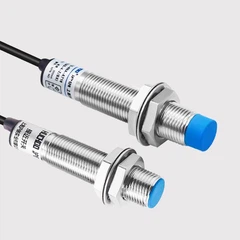
From a functional perspective, industrial control components are primarily categorized into three categories: sensors, actuators, and controllers. Sensors, as the fundamental components of the system's perception layer, collect physical quantities such as temperature, pressure, and displacement, converting them into electrical signals and transmitting them to the control unit. Common temperature sensors monitor the operating environment through thermistor changes, while photoelectric sensors detect object position using the principle of light beam interruption. These components typically possess high sensitivity and interference resistance, making them suitable for precision monitoring scenarios.
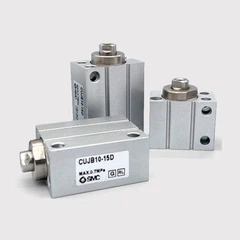
Actuators, as the terminal execution units for control commands, primarily perform mechanical action conversion. Pneumatic actuators use compressed air to open and close valves and are widely used in chemical pipeline control. Electric actuators, known for their precise angle adjustment capabilities, are often used as positioning devices in automated assembly lines. These two types of actuators differ significantly in response speed and load capacity, requiring specific matching based on operating parameters.
Controllers, serving as the "brains" of a system, include PLCs (Programmable Logic Controllers), DCSs (Distributed Control Systems), and industrial PCs. PLCs, with their modular design and real-time response, have become standard equipment in discrete manufacturing. DCS systems, through their distributed control architecture, enable collaborative management of large-scale process industries. Modern industrial PCs, combining the computing power of computers with the real-time capabilities of controllers, are playing an increasingly important role in intelligent manufacturing.
Different control components have their own unique characteristics in terms of communication protocols, protection levels, and scalability. Choosing the right combination of components requires comprehensive consideration of factors such as the production environment, precision requirements, and cost budget. With the development of Industrial Internet of Things (IIoT), intelligent control components with data interaction capabilities are becoming a key area of industry upgrade. This requires companies to proactively assess system compatibility and scalability when selecting equipment.
Send Inquiry