




Understanding Industrial Sensors And Their Classifications
Feb 26, 2026
Leave a message
In the complex ecosystem of modern manufacturing, the difference between a chaotic production line and a streamlined, efficient operation often comes down to data. At the very source of this data collection lies the industrial sensor. These devices serve as the fundamental interface between the physical world and digital control systems, acting as the eyes, ears, and skin of automated machinery. An industrial sensor is specifically designed to detect changes in physical parameters-such as temperature, pressure, flow, level, position, or vibration-and convert these analog realities into electrical signals that can be processed by programmable logic controllers (PLCs), computers, or cloud-based analytics platforms. Unlike their consumer-grade counterparts, industrial sensors are engineered for durability, capable of withstanding extreme temperatures, corrosive chemicals, high-pressure environments, and intense electromagnetic interference.
The importance of the industrial sensor cannot be overstated in the context of Industry 4.0 and the Industrial Internet of Things (IIoT). In a smart factory, these devices do more than just trigger a switch; they provide continuous streams of data that enable real-time decision-making, predictive maintenance, and quality assurance. By monitoring the health of machinery and the status of production processes, sensors help prevent catastrophic failures, reduce downtime, and ensure product consistency. Without the reliable input provided by these robust detection units, the concept of a fully autonomous, self-optimizing factory would remain a theoretical impossibility.
Classifying industrial sensors is essential for engineers and system integrators to select the right tool for a specific application. The most primary method of classification is based on the physical quantity being measured. Under this framework, sensors are grouped into categories such as temperature sensors (including thermocouples, RTDs, and thermistors), pressure sensors (utilizing strain gauges or piezoelectric elements), and flow sensors (using ultrasonic, magnetic, or differential pressure methods). Additionally, there are proximity sensors for detecting object presence, vision sensors for optical inspection, and acceleration sensors for monitoring vibration. Each category addresses a specific need, ensuring that every variable in a complex process is accounted for. When selecting an industrial sensor based on the measured variable, engineers must consider the specific range, accuracy, and response time required for the task at hand.
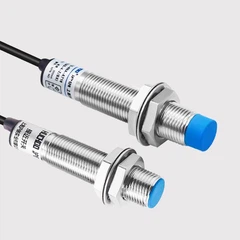
A second major classification approach focuses on the operating principle or the technology used to achieve detection. This includes resistive, capacitive, inductive, optical, and piezoelectric technologies. For example, inductive sensors are highly effective for detecting metallic objects without contact, making them ideal for heavy metalworking, while capacitive sensors can detect both metallic and non-metallic materials, including liquids and powders. Optical sensors use light beams to detect objects or measure distances with high precision, whereas ultrasonic sensors rely on sound waves, making them suitable for dusty or foggy environments where light might be obscured. Understanding the underlying physics of each industrial sensor type is crucial, as it dictates the device's suitability for specific environmental conditions and target materials.
Finally, sensors can be classified by their output signal type, which determines how they communicate with the control system. Traditional analog sensors output a continuous signal, typically 4-20 mA or 0-10 V, which is proportional to the measured value. This is useful for applications requiring granular data trends. In contrast, digital sensors output discrete signals (on/off) or communicate via sophisticated industrial protocols like IO-Link, Profinet, or Ethernet/IP. The shift toward digital communication has revolutionized the field, allowing sensors to transmit diagnostic information, configuration data, and multiple process variables over a single cable. This evolution transforms a simple detection component into an intelligent node within a networked system.
In conclusion, industrial sensors are the indispensable foundation of modern automation. Their ability to accurately perceive the physical environment and translate it into actionable digital data drives efficiency, safety, and innovation across all industrial sectors. Whether classified by what they measure, how they work, or how they communicate, these devices are the critical enablers of the smart manufacturing era. As technology continues to advance, the role of the industrial sensor will only expand, becoming even more integrated, intelligent, and vital to the global economy.
If you are looking for a reliable supplier of industrial automation parts, please link to industrial control parts and contact with us at any time.
Send Inquiry