




Overview Of Pneumatic Fluid Control Components
Jun 28, 2025
Leave a message
Pneumatic fluid control components are core components in industrial automation and fluid power systems, primarily used to regulate, control, and transmit compressed air or other gaseous media to achieve precise motion control and energy transfer. They are widely used in manufacturing, automotive, aerospace, medical devices, energy, and other fields, and are a key technological foundation for efficient and reliable automated production.
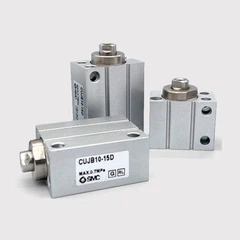
Functionally, pneumatic fluid control components primarily include air conditioning components, control valves, actuators, and auxiliary devices. Air conditioning components, such as filters, pressure regulators, and lubricators, purify, stabilize, and lubricate compressed air, ensuring system stability and extending component life. Control valves, the "central nervous system" of the system, include directional control valves, pressure control valves, and flow control valves, respectively, which regulate airflow direction, pressure, and flow, thereby precisely controlling the movement of the actuators. Actuators, such as cylinders and pneumatic motors, convert gas pressure energy into mechanical energy, driving the load to achieve linear or rotary motion. Auxiliary devices, such as piping, fittings, and mufflers, connect components and optimize system performance.
The design of pneumatic fluid control components must balance reliability, responsiveness, and adaptability. Modern technological trends are moving toward intelligent, modular, and energy-efficient designs. For example, pneumatic valves with integrated sensors and digital controls enable real-time monitoring and remote control, enhancing system automation. Furthermore, lightweight materials and compact designs further enhance component adaptability, particularly in space-constrained applications.
In short, as the cornerstone of industrial power systems, technological advancements in pneumatic fluid control components continue to drive innovation in the automation field, and they will demonstrate even greater potential in the future for high precision, low energy consumption, and intelligent operation.
Send Inquiry