




The Key Role And Application Of Industrial Control Components
Jun 01, 2025
Leave a message
In modern industrial production, industrial control components are core components that ensure efficient and stable equipment operation. These components are widely used in automated production lines, intelligent manufacturing systems, and various industrial equipment, performing crucial functions such as signal processing, data acquisition, and equipment control. With the advancement of Industry 4.0, the technological level of industrial control components continues to improve, providing solid support for the digital transformation of the manufacturing industry.
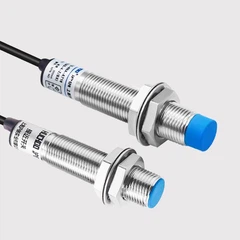
Industrial control components primarily include sensors, controllers, actuators, relays, and human-machine interfaces (HMIs). Sensors collect physical quantities such as temperature, pressure, position, and speed, converting them into electrical signals to provide real-time data to the control system. Controllers, based on sensor feedback, perform calculations according to pre-set logic and issue control commands. Common controllers include programmable logic controllers (PLCs) and distributed control systems (DCSs), which play a vital role in industrial automation.
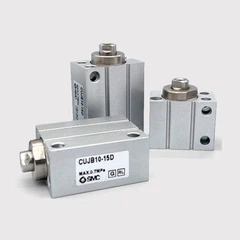
Actuators are the final execution unit of a control system, responsible for converting control signals into mechanical actions, such as driving motors and opening and closing valves. Relays, as switching elements in circuits, control the on and off of high-current devices, ensuring safe system operation. The human-machine interface (HMI) provides intuitive operation, allowing operators to monitor equipment status and make adjustments in real time, improving production efficiency and safety.
The performance of industrial control components directly impacts the stability and reliability of the entire production system. High-precision sensors ensure data accuracy, while stable controllers ensure precise execution of control logic. Furthermore, industrial control components must possess excellent environmental adaptability and be able to operate normally under harsh conditions such as high temperature, high humidity, and high electromagnetic interference.
With the continuous advancement of industrial automation and intelligence, industrial control components are moving towards modularization, intelligence, and networking. By integrating communication functions, these components enable interoperability between devices, supporting remote monitoring and predictive maintenance, further improving production efficiency and reducing operating costs.
Selecting the right industrial control components is crucial for optimizing production processes and improving product quality. In the future, with the continuous advancement of technology, industrial control components will continue to drive the manufacturing industry towards greater efficiency and intelligence.
Send Inquiry