




The Working Principle Of PLC
Nov 24, 2025
Leave a message
PLC is essentially a "modular microcomputer" designed specifically for industrial environments. The core of its working principle is the closed-loop mechanism of "receiving signals through hardware, processing logic through software, and outputting instructions through hardware" to achieve precise control of external devices. The implementation of this mechanism relies on a high degree of synergy between hardware structure and software system.
The hardware structure of PLC adopts modular design, which can be flexibly combined according to control requirements. The core components include the following five parts, each with clear division of labor and close cooperation:
Central Processing Unit (CPU): As the "brain" of PLC, it is responsible for executing logical operations, data processing, and instruction scheduling in user programs. It can quickly read input signals, run ladder diagrams and other programs, judge the calculation results, and send control instructions to the output module. Its calculation speed directly determines the response efficiency of the PLC, and the instruction execution time of mainstream industrial PLCs can reach the microsecond level.
Memory: divided into system memory and user memory. The system memory is used to store the operating system, driver programs, and other core software of the PLC, ensuring the basic operation of the equipment.The user memory is dedicated to storing user written control programs (such as production process logic, fault handling mechanisms) and temporary data (such as device operating parameters, counting results), supporting program modification and updates.
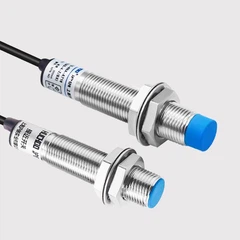
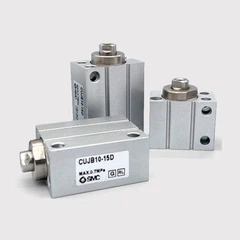
Input/Output (I/O) Module: The "bridge" between PLC and external devices, enabling bidirectional signal conversion. The input module is responsible for converting analog signals (such as temperature, pressure) or digital signals (such as on-off signals) from sensors (such as photoelectric switches, temperature sensors), buttons, knobs, and other devices into electrical signals recognizable by the PLC. The output module converts the calculation results of the CPU into control signals that can be received by external actuators (such as motors, solenoid valves, indicator lights), completing the closed-loop process of "perception decision execution".
Power module: Provides stable working power for the entire PLC system, usually converting AC power (such as AC 220V) from industrial sites to DC power (such as DC 24V) required internally by the PLC. It also has overvoltage and overcurrent protection functions to ensure stable operation of equipment in complex industrial environments.
Communication module: realizes the interconnection between PLC and other devices, supports mainstream industrial communication protocols such as PROFINET, Modbus, EtherNet/IP, etc. Through the communication module, PLC can be networked with touch screens, industrial computers, MES systems (manufacturing execution systems) or other PLCs to achieve data exchange and remote control, laying the foundation for intelligent production.
The software system of PLC is divided into system software and user software. The system software is pre installed by the manufacturer and is responsible for hardware drivers, program compilation, and system diagnostics.User software is a control program written by engineers based on production requirements. The mainstream programming methods include ladder diagram (LD), structured text (ST), functional block diagram (FBD), etc. Among them, ladder diagram has become the most commonly used programming method in industrial sites due to its simulation of the characteristics of traditional relay control circuits.
The core logic of software control is "logical operation and timing control" - engineers convert the production process into logical relationships such as "AND", "OR", and "NO", or timing rules such as "delay" and "count" through programming. The CPU of the PLC executes these rules in the preset order to achieve automated control of the production process. For example, in a bottled water production line, the automated filling logic can be completed by setting the program to "start the filling machine with a delay of 0.2 seconds when the photoelectric sensor detects a bottle, and stop after filling for 3 seconds".
PLC is not only a device, but also the embodiment of industrial control ideas. It not only achieved a leap in the production process from "manual operation" to "logic driven", but also propelled the entire manufacturing industry towards intelligent, flexible, and efficient development.
Send Inquiry