




The Working Process Of Programmable Logic Controllers (PLCs)
Dec 11, 2025
Leave a message
In the realm of industrial automation, Programmable Logic Controllers (PLCs) serve as the core control units that orchestrate the seamless operation of production lines, machinery, and complex systems. The working process of a PLC is a cyclical and highly structured sequence, designed to ensure real-time responsiveness, accuracy, and reliability in harsh industrial environments. At the heart of maintaining this consistent performance lies the quality of automation parts-from input/output (I/O) modules to central processing unit (CPU) components, every spare part plays a vital role in upholding the PLC's operational stability.
A typical PLC working process unfolds in four sequential stages, which repeat continuously once the system is powered on: initialization, input sampling, program execution, and output refresh. The initialization stage kicks off right after the PLC is turned on or reset. During this phase, the CPU conducts a self-diagnosis to check the functionality of internal components, such as memory and communication modules. It also initializes internal registers, timers, and counters to their default values. If any hardware faults are detected, the PLC triggers an alarm and halts normal operations, highlighting how even minor defects in automation parts can disrupt the entire control flow.
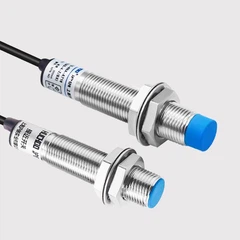
Following initialization, the PLC enters the input sampling stage. In this phase, the CPU scans all input terminals in a predefined order, collecting signals from field devices like sensors, push buttons, and limit switches. These analog or digital signals are converted into binary data (0s and 1s) and stored in the input image register-a dedicated memory area that acts as a snapshot of the field status at that precise moment. Notably, any changes in input signals during subsequent stages will not take effect until the next sampling cycle, ensuring program execution is based on a stable set of data. The durability of input modules, a critical category of automation parts, directly impacts the accuracy of signal collection, especially in environments with high electromagnetic interference.
Next comes the program execution stage, the core of the PLC's operation. The CPU executes the user-written control program line by line, following a top-to-bottom and left-to-right sequence. It retrieves data from the input image register and internal memory, performs logical operations (such as AND, OR, NOT), arithmetic calculations, and timing/counting functions as specified in the program. The results of these operations are temporarily stored in the output image register, rather than being directly sent to the output terminals. This isolated execution mode prevents external disturbances from affecting the logic processing, guaranteeing the precision of control decisions. The efficiency of this stage is closely tied to the performance of CPU chips and memory modules, key automation parts that determine the PLC's response speed and processing capacity.
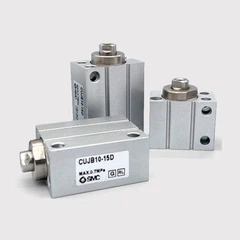
The final stage is output refresh. After completing program execution, the CPU transfers the data stored in the output image register to the output terminals in sequence. These signals are then converted into actionable commands for field actuators, such as motors, solenoid valves, and indicator lights, driving the corresponding equipment to perform designated actions. Once the output refresh is finished, the PLC immediately returns to the input sampling stage, initiating a new cycle. This continuous loop ensures that the PLC can dynamically adjust to changes in the industrial process, maintaining real-time control. The reliability of output modules and relays, essential automation parts, is crucial here, as they act as the bridge between the PLC's internal logic and external equipment operation.
As a professional supplier with over a decade of experience in the automation industry, Synctime Automation Tech Co., Ltd offers a one-stop service for automation parts tailored to the diverse needs of industrial clients worldwide. Specializing in a comprehensive range of components-from PLC I/O modules and CPU units to sensors and relays-the company has built an excellent reputation for its consistent product quality, competitive pricing, and efficient delivery services.
Send Inquiry