




Working Principles And Core Mechanisms Of Industrial Electronic Components
Jun 10, 2025
Leave a message
Industrial electronic components are fundamental components of modern automation equipment and control systems. Their operating principles involve multiple processes, including electrical signal processing, energy conversion, and data exchange. These components typically include sensors, relays, connectors, PCBs (printed circuit boards), and power modules, each performing specific functions and working together to ensure the stable operation of industrial equipment.
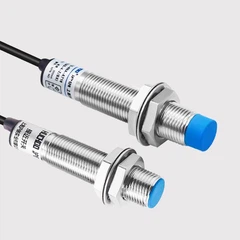
Sensors are a core component of industrial electronic components. Their operating principle is based on physical or chemical effects, converting non-electrical signals (such as temperature, pressure, and displacement) into electrical signals. For example, thermocouples use the Seebeck effect to measure temperature differences and output voltage signals, while photoelectric sensors use light-sensitive elements to detect changes in light reflected or blocked by an object. These signals are amplified and conditioned before being transmitted to a controller for further processing.
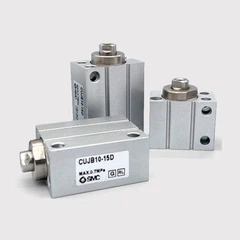
Relays and switching elements are responsible for controlling the on/off state of circuits. Electromagnetic relays generate a magnetic field by energizing a coil, driving mechanical contacts to close or open, achieving low-power control of high-current circuits. Solid-state relays (SSRs) use semiconductor devices (such as thyristors) for contactless switching, offering faster response times and higher reliability.
Connectors and PCBs ensure efficient signal and power transmission. Connectors enable rapid assembly of modular devices through standardized interfaces, while PCBs integrate electronic components (such as resistors, capacitors, and chips) in a compact space using copper traces. Circuit design enables signal amplification, filtering, and logic operations.
Power modules, including AC-DC converters and DC-DC regulators, provide stable power to the system, maintaining a constant voltage through rectification, filtering, and feedback regulation. Some high-end components also integrate microprocessors and support digital communication protocols (such as Modbus and CAN bus) for remote monitoring and data exchange.
In summary, the operating principles of industrial electronic components rely on the synergy of electromagnetics, semiconductor technology, and signal processing theory. Their reliability directly impacts the efficiency and safety of industrial systems. With the advancement of intelligent technology, these components are increasingly integrating AI algorithms and IoT capabilities, driving industrial automation to a higher level.
Send Inquiry