




Research Progress in Automation Components: Technological Innovation And Industrial Application
Jun 20, 2025
Leave a message

Recent years have seen significant progress in the research of automation components, driving intelligent upgrades in areas such as industrial manufacturing, smart services, and medical equipment. As the core units of automation systems, performance improvements in key components such as sensors, actuators, and controllers directly determine the accuracy, reliability, and adaptability of automation systems.
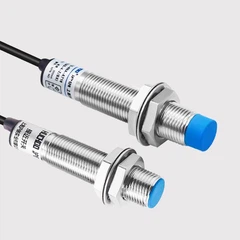
In the sensor field, miniaturization and high precision are the main trends. Pressure, acceleration, and optical sensors based on MEMS (microelectromechanical systems) technology are continuously breaking through size limitations while significantly improving sensitivity and response speed. For example, new fiber optic sensors enable nanoscale displacement detection and are widely used in precision manufacturing and aerospace. Furthermore, multimodal sensor fusion technology, by integrating visual, tactile, and force data, empowers automated equipment with enhanced environmental awareness.
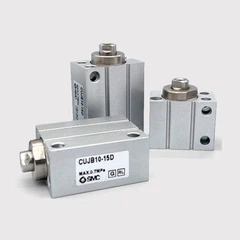
In actuators, breakthroughs have been made in the research of intelligent actuation materials such as shape memory alloys (SMAs) and electroactive polymers (EAPs), enabling more flexible motion control and energy efficiency. For example, flexible robotic arms based on EAPs can mimic the contractile properties of biological muscles, making them suitable for minimally invasive surgery and rehabilitation assistance devices. At the same time, the energy efficiency of servo and stepper motors continues to improve. Combined with advanced motion control algorithms, this further enhances the dynamic performance of automation systems.
Controllers, serving as the "brains" of automation systems, are evolving towards edge computing and AI integration. Real-time control platforms based on FPGAs and GPUs are capable of processing massive data streams, while the introduction of deep learning algorithms enables controllers to achieve adaptive learning and fault prediction capabilities. For example, in the field of industrial robotics, reinforcement learning technology is already being used to optimize path planning and dynamic obstacle avoidance.
In the future, with the convergence of 5G, the Internet of Things, and digital twin technologies, automation components will further develop towards intelligence, networking, and modularity, providing even stronger technical support for smart manufacturing and smart cities.
Send Inquiry