




The Value Of Industrial Control Components: The Core Foundation Of Modern Manufacturing
Jun 05, 2025
Leave a message
In today's highly automated industrial environment, industrial control components play a crucial role. They are not only the "brains" and "nerves" of production equipment, but also the fundamental guarantee of efficiency, precision, and reliability in modern manufacturing. These seemingly insignificant electronic and mechanical components actually carry the core value of industrial production. Their importance has become increasingly prominent with the advent of Industry 4.0, as we evolve from basic automation to intelligent manufacturing.
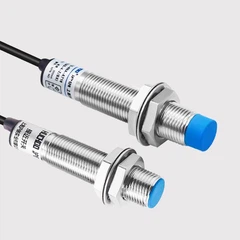
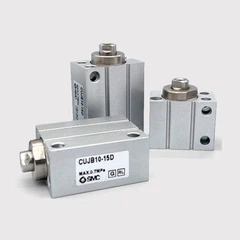
The most direct value of industrial control components lies in their precise control of the production process. The various modules, sensors, and actuators within programmable logic controllers (PLCs) and distributed control systems (DCSs) constitute the "central nervous system" of industrial equipment. For example, in automotive manufacturing, a car body welding production line may include hundreds of sensors that monitor weld position and quality in real time, and dozens of servo drives that precisely control the motion trajectory of robotic arms. These control components work together to ensure that each weld's positional deviation does not exceed 0.1 mm, and that weld strength meets 99.99% of the design standard. This level of precision control is nearly impossible without high-quality control components. This value is even more pronounced in semiconductor manufacturing. During wafer processing, temperature, pressure, and gas flow control precision often requires submicron or even nanometer levels. Any slight deviation in a control component can render an entire batch of chips scrapped, resulting in economic losses reaching millions of dollars.
From the perspective of efficiency improvement, industrial control components create significant economic value by optimizing production processes. In modern industrial control systems, the combination of PLCs and industrial PCs can process production logic with millisecond response speeds, and variable frequency drives can adjust motor speed in real time based on load changes. These technologies enable energy efficiency improvements of 30%-50%. A typical cement manufacturer improved kiln combustion efficiency by 18% by upgrading its distributed control system with intelligent control valves and pressure sensors, saving over $2 million annually in fuel costs alone. More notably, advances in control components have made predictive maintenance a reality. A combination of vibration sensors and intelligent analytical algorithms can predict motor bearing failures weeks in advance, avoiding the significant costs of unplanned downtime. Globally, unplanned downtime costs the industrial sector an estimated $800 billion annually, and advanced control components can reduce this figure by over 40%.
Industrial control components are also a crucial safeguard for industrial safety. In high-risk industries like petrochemicals and nuclear power plants, control components such as emergency shutdown valves and gas detection sensors in safety instrumented systems (SIS) are directly related to human life and environmental safety. These components typically utilize redundant designs, requiring a mean time between failures (MTBF) of at least hundreds of thousands of hours. The investigation into the 2010 Deepwater Horizon oil rig accident in the Gulf of Mexico indicated that the disaster could have been avoided if the pressure sensor data transmission system had had higher reliability and anti-interference capabilities. Modern industrial control components have achieved functional safety certification (such as the IEC 61508 SIL level), ensuring a reliability of over 99.99% for critical safety functions. This safety value cannot be measured by simple economic indicators.
In the context of the intelligent manufacturing transition, industrial control components are taking on new dimensions of value. Smart sensors with IoT interfaces not only collect data but also perform edge computing. PLCs supporting the OPC UA protocol enable seamless communication across vendors. And AI-based predictive control algorithms require the computing power of high-performance controllers. These advancements have made industrial control components the connecting hub of Industry 4.0. Siemens' latest SIMATIC S7-1500 controller features a built-in AI accelerator chip that can run machine learning models locally, reducing production anomaly detection speeds from minutes with traditional cloud analysis to milliseconds. These intelligent control components are redefining manufacturing competitiveness-those that pioneer advanced control systems can reduce product defect rates to a few parts per million, a level unattainable with traditional manufacturing methods.
From an economic perspective, while industrial control components typically only account for 10%-20% of total equipment costs, they determine over 80% of system performance and lifecycle value. Research by a leading global industrial automation supplier shows that over the lifecycle of typical production equipment (10-15 years), differences in control component performance can result in a difference of more than 35% in total cost of ownership (TCO). This data explains why leading manufacturers are willing to pay a 20%-30% premium for high-end control components-the increased productivity, improved quality, and reduced downtime they deliver ultimately yield a return on investment many times over.
The value of industrial control components also lies in their strategic significance for industrial upgrading. If a country lacks independent and controllable high-end control component technology (such as high-precision servo drives and industrial-grade real-time operating systems), its manufacturing industry will always be at the mercy of others. Recent international supply chain disruptions have repeatedly demonstrated that a shortage of critical control components can paralyze entire production lines within weeks. Therefore, investing in the R&D and domestic substitution of industrial control components is not only an economically rational choice but also an imperative for industrial security.
Looking ahead, with the in-depth development of technologies such as the Industrial Internet and digital twins, the value proposition of industrial control components will continue to expand. They will evolve from simple execution units to intelligent nodes with self-learning capabilities, playing a greater role in the interaction between the virtual and real worlds. However, no matter how technology evolves, the core role of industrial control components as the "nervous system" of manufacturing will remain unchanged. It is the coordinated operation of these precision components that underpins the precise operation of modern industrial civilization and fosters the infinite possibilities of future intelligent manufacturing.
Send Inquiry