




Scope And Applications Of Industrial Control Components
Jun 04, 2025
Leave a message
Industrial control components are core components of modern automated production systems and are widely used in a variety of sectors, including manufacturing, energy, transportation, and construction. These components significantly improve the efficiency and safety of industrial production by precisely controlling machinery, monitoring production processes, and optimizing resource utilization.
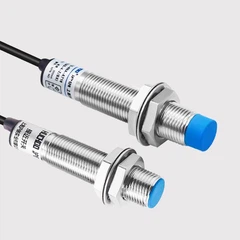
Industrial control components encompass a wide range of components, primarily including sensors, actuators, controllers, human-machine interfaces (HMIs), and industrial communication equipment. Sensors collect critical data such as temperature, pressure, flow, and position, providing real-time feedback to automation systems. Common sensor types include photoelectric sensors, pressure sensors, temperature sensors, and proximity sensors, which play an important role in production line monitoring, quality inspection, and environmental control.
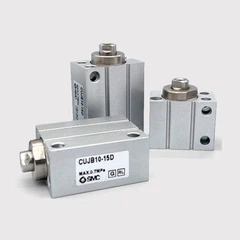
Actuators, such as electric valves, pneumatic cylinders, servo motors, and stepper motors, drive mechanical motion in response to control signals. They convert electrical signals into physical motion, achieving precise position control, speed regulation, or torque output. The reliability and response speed of actuators directly impact production line efficiency.
The controller, the "brain" of an industrial control system, processes sensor data and makes decisions. Programmable logic controllers (PLCs) and distributed control systems (DCSs) are the most common types of controllers, capable of adjusting equipment operating states based on preset programs or real-time data. Modern controllers typically feature powerful computing power and network connectivity, supporting complex automation logic and remote monitoring.
Human-machine interfaces (HMIs) provide operators with a visual platform for interacting with industrial control systems. Using touchscreens or keypads, workers can monitor equipment status, adjust parameters, or receive alarm notifications. HMIs are designed for ease of use and intuitiveness to ensure an efficient operating experience.
Industrial communication equipment ensures stable and reliable data transmission between various control components. Common communication protocols include Modbus, Profibus, Ethernet/IP, and 5G industrial networks, which support high-speed, low-latency data exchange and meet the requirements of smart manufacturing and the Industrial Internet of Things (IIoT).
With the advancement of Industry 4.0, industrial control components are becoming more intelligent, networked, and modular. Future control systems will be more flexible, efficient, and adaptable to changing production needs. Understanding the scope and applications of industrial control components can help companies optimize production processes and enhance their competitiveness.
Send Inquiry