




Overview Of Automation Components And Their Applications
Jun 22, 2025
Leave a message
Automation components are essential core components in modern industrial and intelligent systems. Through sophisticated design and coordinated operation, they enable unmanned, efficient, and precisely controlled production processes. These components are widely used in manufacturing, logistics, energy management, and other fields, driving the global industrial transformation toward intelligence.
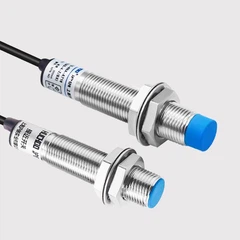
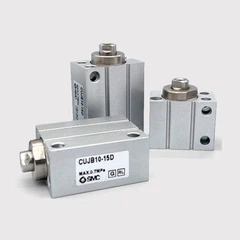
From a functional perspective, automation components primarily include sensors, actuators, controllers, and transmissions. Sensors are the system's "senses," collecting physical quantities such as temperature, pressure, and position and converting them into electrical signals to provide data support for subsequent decision-making. For example, photoelectric sensors on assembly lines accurately detect object position, ensuring the accuracy of robotic arm operations. Actuators are the system's "muscles," converting control signals into mechanical actions, such as electric actuators and pneumatic valves, directly driving equipment to complete predetermined tasks. Controllers, acting as the "brain," coordinate the operation of various components through PLCs (programmable logic controllers) or industrial computers, enabling logical decision-making and process optimization. Transmissions (such as servo motors and reducers) precisely transmit power and ensure stable motion control.
Technological advances in automation components have significantly improved system reliability and efficiency. For example, IoT-based smart sensors enable remote monitoring and predictive maintenance, reducing the risk of downtime. Collaborative robots equipped with high-precision transmission components can seamlessly collaborate with human operators to adapt to flexible production needs. In the future, with the integration of artificial intelligence and edge computing technologies, automated components will possess even greater adaptability, further promoting the implementation of Industry 4.0.
In short, automated components are the cornerstone of building intelligent systems. Their innovation and development will continue to empower various industries, achieving cost reduction, efficiency improvement, and technological breakthroughs.
Send Inquiry